
Last updated August 26, 2026
Free on-site gate assessment - hinges, posts, and your LiftMaster or Nice gate operator checked before anything is quoted
The assessment is free and the quote is the invoice.

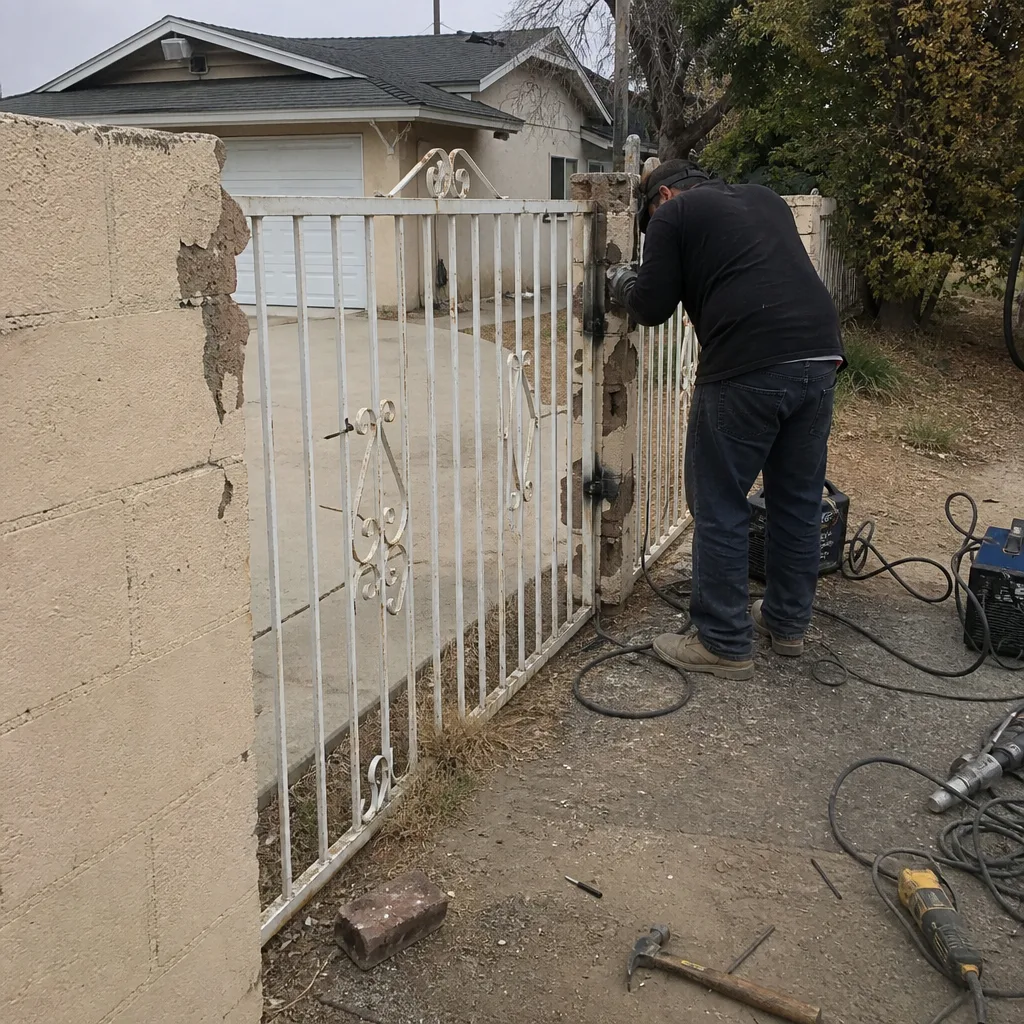 Before
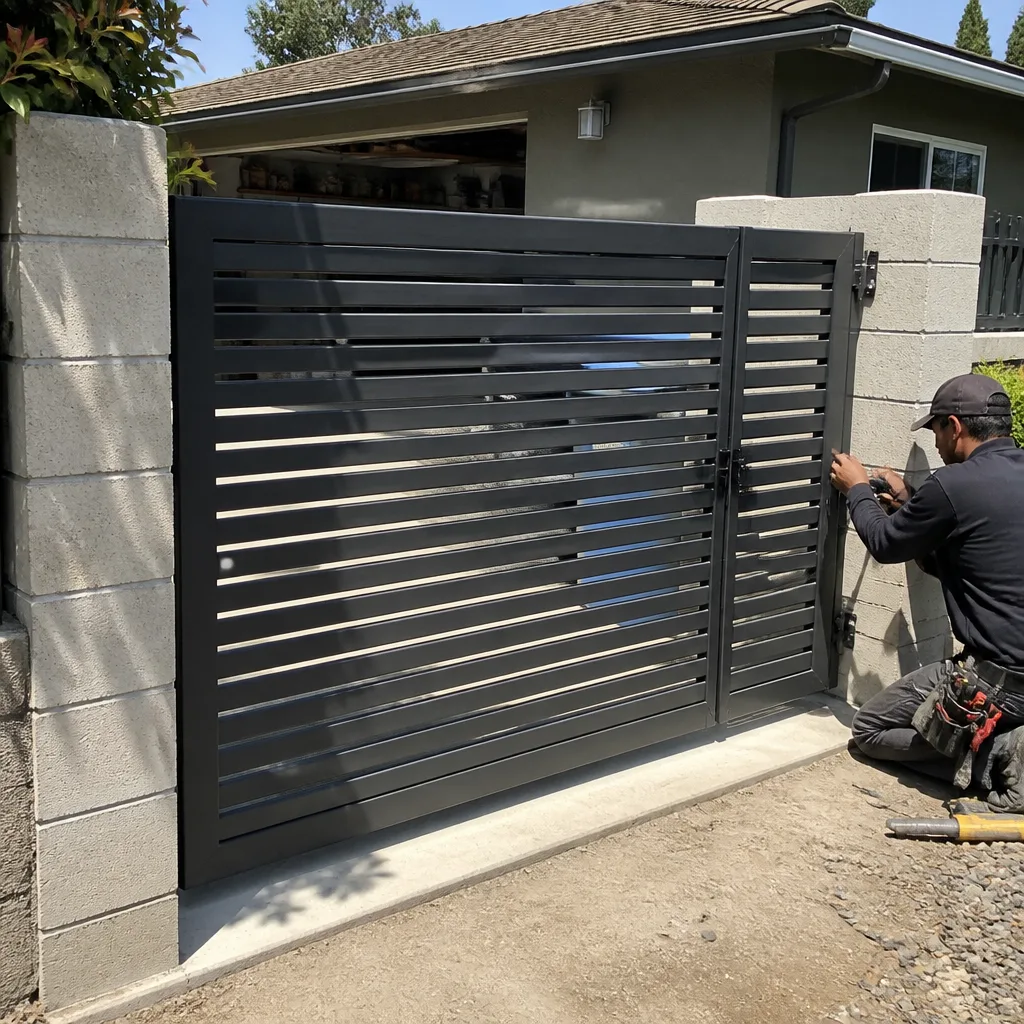 After
After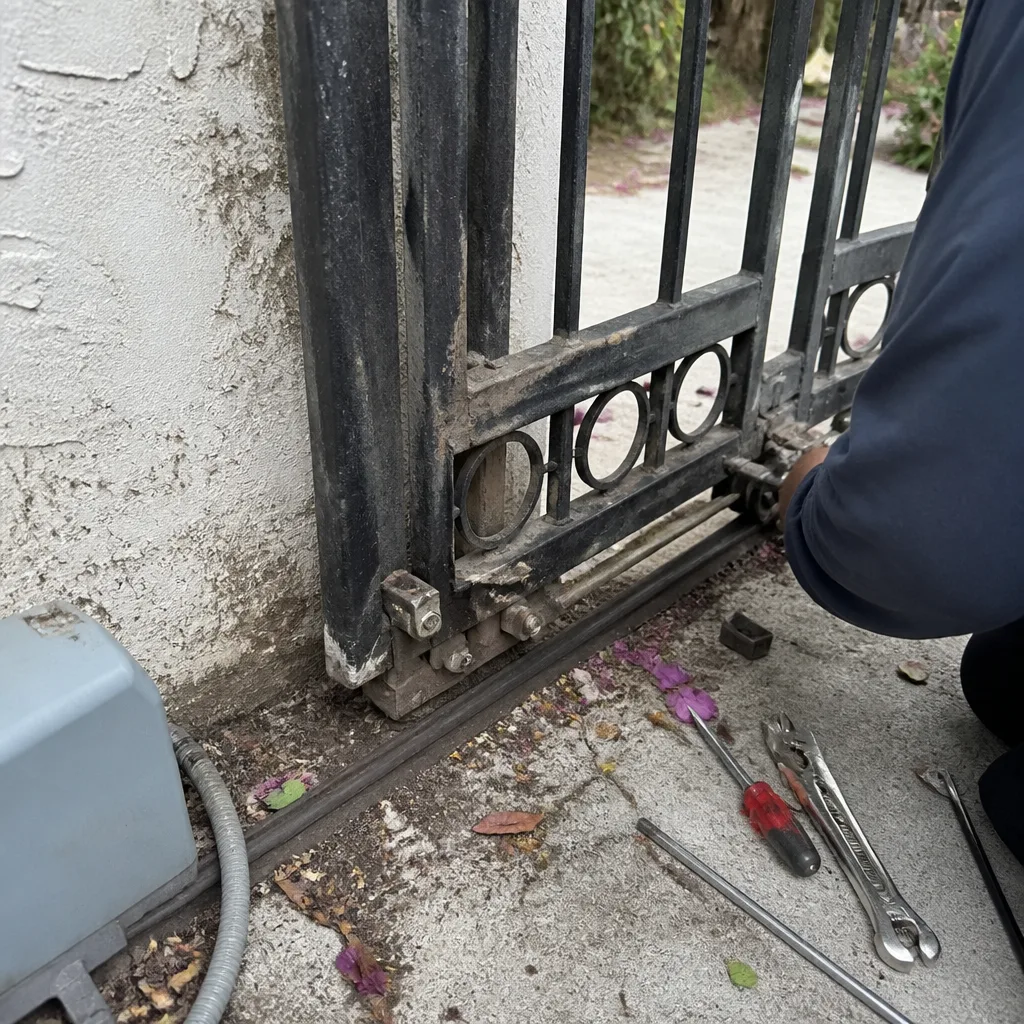 Before
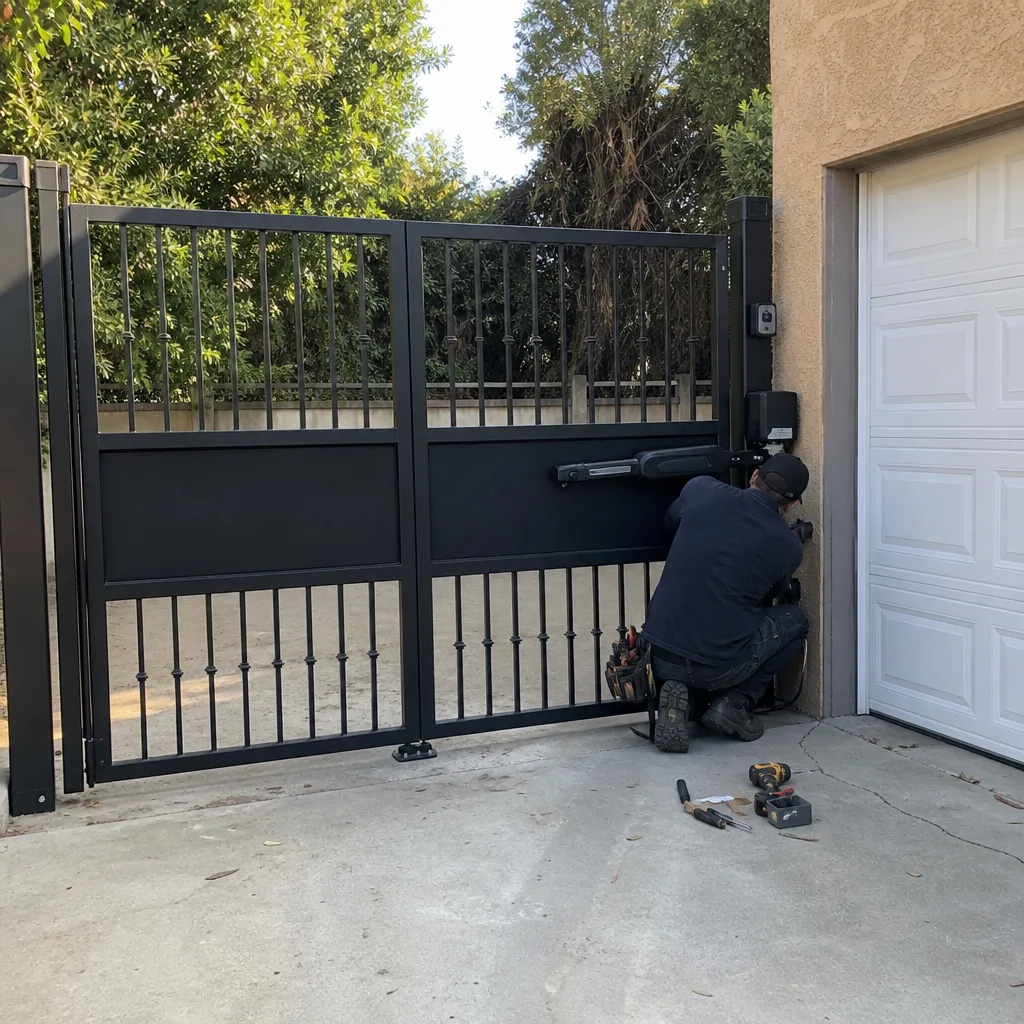 After
After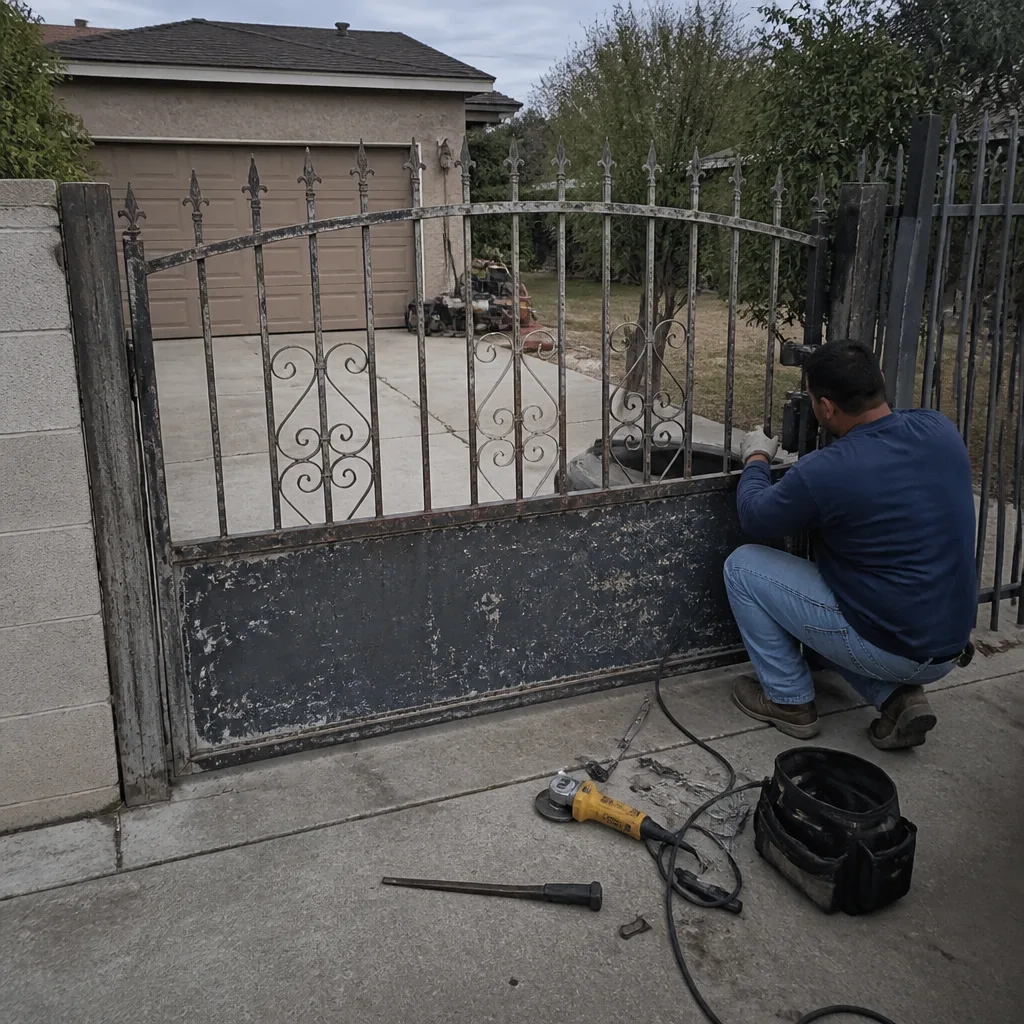 Before
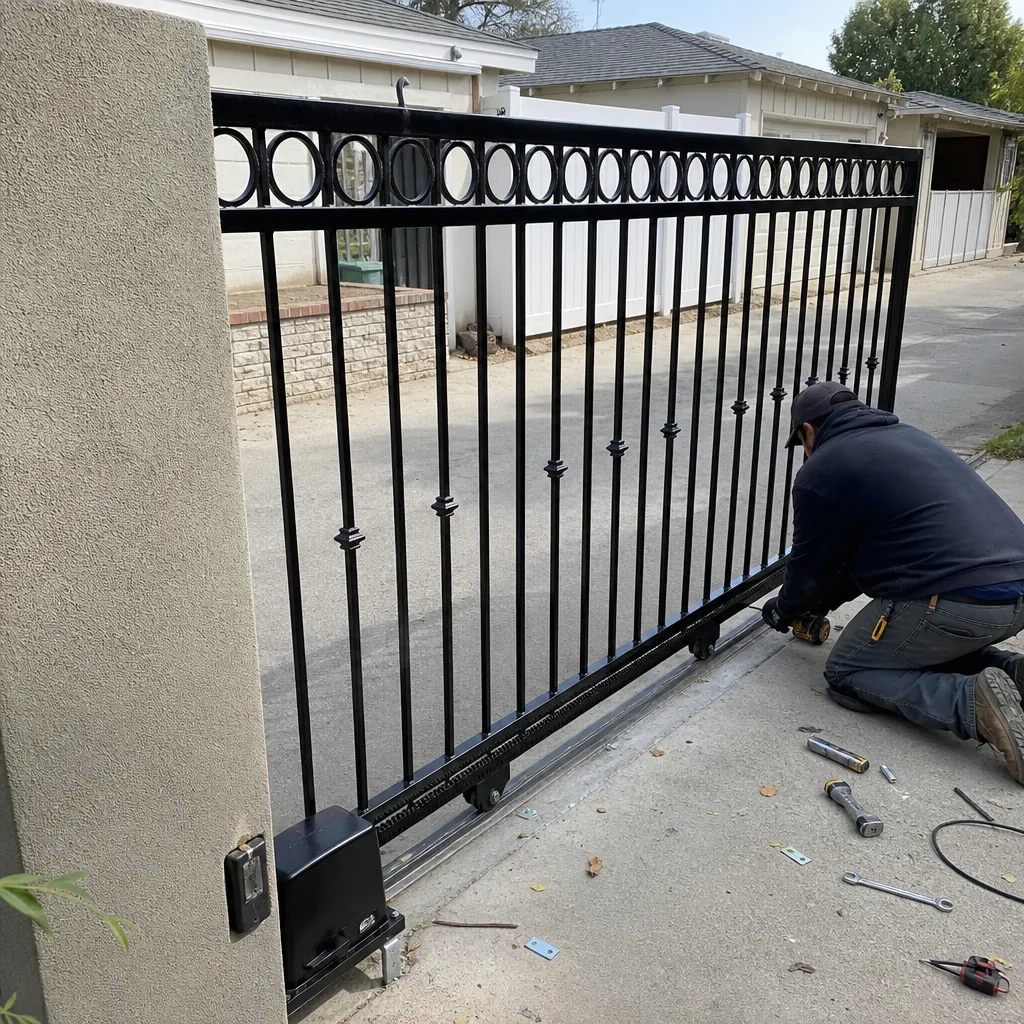 After
AfterDIY vs Professional Gate Repair: The Van Nuys Homeowner’s Decision Guide
In 2019, a homeowner in Reseda decided to reweld a cracked hinge plate on his own 400-pound steel slide gate. He had a borrowed flux-core welder, a YouTube video queued up, and about ninety minutes of free time. The gate shifted while he was underneath it, the weld failed catastrophically, and he needed six stitches in his forearm before the afternoon was over. The repair that would have cost him $380 from a pro ended up costing $2,100 in urgent care, two days of missed work, and a gate that still didn’t close properly.
Here’s what this guide will give you, straight from someone who has been fixing gates in Van Nuys since 2001: a clear line between what a careful homeowner can tackle on a Saturday and what genuinely requires our Gate Repair services. No scaremongering, no “leave everything to us” fluff. Just the truth about which gate repairs are reasonable DIY projects, which ones create liability you don’t want, and how to tell the difference before you pick up a wrench.
Quick Answer
DIY gate repair in Van Nuys is genuinely appropriate for about 20% of common problems: tightening loose hardware, adjusting sensor alignment, lubricating hinges, replacing batteries in keypads, and cleaning corroded contacts. Everything involving the gate operator motor, welded steel joints, structural posts, tension springs, or automated safety systems should go to a licensed professional, because those repairs involve stored mechanical energy, load-bearing welds, and legal liability under California law if the automated system injures someone. When in doubt about which category your gate falls into, the free estimate costs nothing and the wrong answer costs plenty.
Table of Contents
- What You Can Genuinely Do Yourself
- What You Should Never Touch Without a License
- California Liability and UL 325: What the Law Actually Says
- Calculating the True Cost of a Botched DIY Repair
- Tools Worth Owning and Gate Repair Kits Worth Avoiding
- The Honest Answer to “Can’t I Just Watch a YouTube Video?”
- How Van Nuys Climate and Housing Stock Affect Your Gate
- Common Mistakes to Avoid
- When to Call a Professional
- Frequently Asked Questions
What You Can Genuinely Do Yourself
Before we draw the line, let’s be clear about what’s on the safe side of it. Van Nuys is full of capable homeowners, and plenty of gate repairs are no more complicated than hanging a cabinet door. The distinction isn’t about skill level alone. It’s about stored energy, structural load, and liability. If a repair fails and the worst case scenario is a gate that still doesn’t work, that’s DIY territory. If a repair fails and the worst case scenario is a 400-pound gate falling on your car, your kid, or the neighbor’s dog, that’s professional territory.
1. Tightening and Replacing Visible Hardware
Lag bolts, hinge screws, and bracket fasteners work loose over time, especially on the wood-frame gates common in older Van Nuys neighborhoods like Valley Glen and Lake Balboa. The soil here shifts seasonally more than people expect, and that movement telegraphs straight into the gate posts. Grab a socket set and a star-bit driver, and go around the gate checking every visible fastener.
What to do:
- Open the gate fully and chock it so it can’t swing or slide while you work.
- Check every bolt on the hinge plates, latch post, and frame corners. Expect to find at least three loose ones on a gate that’s been up more than five years.
- Tighten what’s loose. If a lag bolt spins without grabbing, the hole is wallowed out. You need a larger-diameter lag or a threaded insert, not just more torque.
- Replace any bolt that shows rust scaling or thread damage. Grade 5 or Grade 8 hardware from a local supplier like Van Nuys Hardware on Sepulveda is fine for this.
This is genuinely safe DIY work. The gate is chocked, the parts are small, and nothing is under dangerous tension. The worst outcome is you strip a bolt and have to upsize it.
2. Aligning Photo Eye Sensors
If your automatic gate starts and then immediately reverses, or won’t close at all, the photo eye sensors are the first thing to check. These are the little boxes mounted near the bottom of the gate opening on either side. They send an invisible beam across the opening, and if that beam is broken, the gate refuses to close.
What to do:
- Clean both sensor lenses with a dry cloth. Van Nuys has plenty of airborne dust, especially during Santa Ana winds, and a dirty lens is the most common cause of sensor failure.
- Check the alignment. Each sensor has a small LED indicator. On most brands, a solid green light means aligned, a blinking light means not.
- Loosen the mounting bracket and adjust until both lights are solid. This usually takes five minutes and a little patience.
- Test the gate by opening and closing it twice while you stand clear.
Sensor alignment is exactly the kind of repair we think every homeowner should know how to do. It’s not dangerous, it’s not complicated, and knowing it will save you a service call the next time a weed grows up in front of the beam.
3. Lubricating the Track and Rollers
Slide gates in Van Nuys don’t just glide on magic. They ride on steel wheels in a track, and that track fills up with decomposed granite, palm fronds, and whatever else the wind pushes through the fence line. A gate that groans, stutters, or shudders usually has a track full of debris and dry bearings.
What to do:
- Sweep out the track channel with a stiff brush. Dig out anything packed into the corners.
- Check the rollers for wobble or flat spots. A flat spot on a roller means you need a new roller, not more grease.
- Apply a silicone-based lubricant to the roller bearings and the top track. Do not use WD-40, motor oil, or axle grease. Those attract dust and turn into grinding paste within a week.
- Run the gate through three full open-close cycles and re-lubricate anything that still sounds dry.
This should be done twice a year in Van Nuys, more often if you live near a major road like Victory or Vanowen where brake dust and road grime pile up faster-check our Gate Repair Maintenance Checklist for Van Nuys Homeowners for the full schedule.
What You Should Never Touch Without a License
Now the other side of the line. These are the repairs where we’ve seen DIY attempts go wrong in ways that cost more than the repair would have on day one. They share one thing in common: stored energy. A gate that weighs 400 pounds, a spring under enough tension to launch a person, an operator motor with capacitors that can hold a charge. These are not about handiness. They’re about physics.
1. Torsion Springs and Counterbalance Systems
Some gates, particularly heavier ornamental steel gates in the hillside neighborhoods of Sherman Oaks and Encino adjacent to Van Nuys, use torsion springs to balance the gate’s weight. These springs are wound under hundreds of pounds of tension. When they let go, they don’t sag. They release. The injuries we’ve seen in this industry from torsion springs are the kind that change people’s hands permanently.
The issue isn’t just the immediate danger. It’s that most torsion spring failures require partial disassembly of the gate assembly to access, and that’s when the gate’s balance system stops supporting its weight. If you don’t know exactly how to transfer the load before you touch the spring, the spring will teach you. Not a DIY job. Ever.
2. Welding, Period
On-site welding is one of the core services we offer at Gatewood Fence & Gate, and there’s a reason for that. A cracked hinge plate on a steel gate isn’t just a cosmetic crack. That crack is telling you the metal has been flexing past its fatigue limit, which means the surrounding steel is also compromised. A proper repair requires grinding out the crack, reinforcing the plate with a gusset, and welding at the correct amperage for the material thickness.
The homeowner in Reseda with the six stitches learned that a flux-core welder borrowed from a friend puts down a weld that looks fine on the surface and has almost no penetration. His gate held for exactly four days before the plate cracked again, this time at the edge of his new weld. The difference between a cosmetic weld and a structural weld is invisible to most people, and it’s the entire ballgame. If your gate needs welding, call someone who welds gates every week, not someone who welds once a year.
3. Operator Motor Replacement or Wiring
Gate operator motors from brands like DoorKing, LiftMaster, and FAAC operate on 110V or 220V circuits, and many include a capacitor that stores enough charge to knock you on your back even after the power is cut. Replacing an operator motor involves disconnecting line voltage, matching the new motor to the existing control board, and re-setting the force limits and travel limits. Get the force limit wrong and the gate will push hard enough to crush something before it reverses.
Beyond the electrical danger, there’s the software. Modern gate motor and opener systems in Van Nuys have proprietary programming sequences, and a motor that’s wired correctly but programmed incorrectly will still fail. We service nine major brands including DoorKing, Elite, and Mighty Mule, and the programming sequence is different for every single one of them. This isn’t a matter of being handy. It’s a matter of having done it forty times before.
4. Structural Post Replacement
A gate sags in the hinge post, not in the middle. That’s one of the first things we tell every homeowner, because the instinct is always to adjust the gate panel itself. But if the post that carries the gate has rotted at the base or shifted in the soil, no amount of hinge adjustment will fix the droop. You’ll fix it twice and be mad at yourself both times.
Post replacement means digging out the old footing, setting a new post in concrete, and getting it plumb in two directions before the concrete sets. In Van Nuys, where the soil is a mix of sandy loam and clay, the footing needs to be deep enough to get below the movement zone, or the new post will wander just like the old one did. Most DIY post jobs fail within eighteen months because the footing isn’t deep enough. That’s not a skills gap. That’s just not having dug enough holes to know how deep the hole needs to be.
California Liability and UL 325: What the Law Actually Says
Here’s the part most “DIY or not” guides skip entirely, and it’s the most important reason to be careful with automated gates in Van Nuys. Under California law, an automatic gate is considered a machine. Not a fence. A machine. And like any machine that operates without a person directly controlling it, the person who installs or repairs the safety systems carries the liability if that machine injures someone.
UL 325 is the national safety standard for automated gate operators. It sets requirements for entrapment protection: photo eyes, contact edges, force limits, and warning signage. A gate that’s out of UL 325 compliance is a gate that will not stop when a child runs into its path, and a homeowner who modifies their own operator and then has that gate injure someone is personally liable. Homeowners insurance policies frequently exclude injuries caused by non-compliant automated gates, which means that injury claim comes out of the homeowner’s pocket.
What does that look like in practice? If you install a new operator motor yourself, wire it incorrectly, and the gate crushes a neighbor’s leg, the neighbor’s attorney will ask who installed the operator. The answer “I did” ends the conversation about shared liability. Your insurance company will then explain that your policy excludes injuries caused by non-UL-325-compliant automated systems, and you’ll be writing checks from a personal account for the rest of your life.
None of this means you can’t adjust a sensor or replace a battery. Those are maintenance, not modification. The liability attaches when you change the behavior of the automated system: new motors, new control boards, rewired safety edges, altered force settings. Those are the repairs where a licensed professional’s errors and omissions coverage is worth every dollar of the service call fee.
Calculating the True Cost of a Botched DIY Repair
We’ve seen homeowners attempt a DIY repair, fail, and then pay more for the professional fix than the original repair would have cost. Here’s the math, using a real example from a home near Van Nuys High School.
In 2023, a homeowner with a swinging driveway gate noticed the gate was dragging on the ground near the latch side. They diagnosed it as a bent hinge and bought a replacement hinge set from an online retailer for $62. They removed the gate from the posts with the help of a neighbor, which took most of a morning. The new hinges didn’t match the existing hole pattern, so they drilled new holes in the steel frame. In the process, they discovered the real problem: the hinge post itself had rotted at the base and was leaning outward by nearly four inches.
They decided to “just shore up” the post with a couple of bags of quick-set concrete and a steel stake driven alongside it. It held for two months. Then the post leaned again, this time taking the gate with it and cracking the latch mechanism. At that point they called us. The final bill to dig out the old footing, set a new post, rehang the gate, and replace the latch was $740. They’d already spent $62 on hinges, $31 on concrete and stakes, and about eight hours of their own time. The original repair, had we been called first, would have been around $450.
That’s the calculation you need to run before starting a borderline repair. Add up the parts cost, the time cost at whatever your hourly rate actually is, and the probability that you’ll fail and need a pro anyway. On genuinely simple repairs, the math favors DIY. On anything structural, the math almost never does.
Tools Worth Owning and Gate Repair Kits Worth Avoiding
If you plan to handle the DIY-appropriate repairs we listed earlier, here’s what you actually need. And here’s what the internet will try to sell you that you should not buy.
Worth Owning
- Socket set with metric and SAE sizes, 8mm to 19mm and 1/4 to 3/4. Gates in Van Nuys run a mix of both, especially on older properties.
- Star-bit (Torx) driver set. Many gate operator covers and sensor brackets use T20 and T25 fasteners.
- Digital multimeter. For testing battery voltage and continuity on sensor wires. Nothing fancy; a $30 meter is fine.
- Silicone spray lubricant. Specifically silicone, not petroleum-based.
- Stiff wire brush and a shop vacuum. For cleaning the track on slide gates.
- Two heavy-duty wheel chocks or wood blocks. For immobilizing a gate before you work on it. Never skip this.
Worth Avoiding
- Universal gate repair kits sold on Amazon or eBay. These are the $49 bundles with assorted springs, screws, and brackets that claim to “fix any gate.” What they actually contain is a random assortment of hardware-store leftovers that don’t match any real gate made after 1995. We’ve thrown dozens of these in the trash.
- “Heavy duty” replacement hinges sold without a brand name. A gate hinge that costs $11 online is not heavy duty. It’s stamped steel with a decorative powder coat. The real hinges on a 300-pound gate cost $30 to $60 each because they’re machined and heat-treated.
- Pool-grade photo eye sensors. They look identical to gate sensors and cost half as much, but they’re not rated for gate operator systems and won’t communicate correctly with a DoorKing or Ghost Controls control board. Don’t buy sensors without confirming they’re UL 325 compliant for gate operators specifically.
The Honest Answer to “Can’t I Just Watch a YouTube Video?”
You can watch a YouTube video for any repair on the planet. The question is whether the video teaches you the whole job or just enough to get you into trouble. For more guides & resources, here’s the honest breakdown, repair by repair, from someone who has been called in to fix a lot of YouTube-assisted attempts.
Where YouTube Genuinely Helps
- Sensor alignment. The videos are short, the job is simple, and the consequences of doing it wrong are a gate that doesn’t close. That’s an acceptable risk profile.
- Remote control programming. For older DoorKing and Mighty Mule operators, the programming steps are specific and easy to follow from a video. The worst outcome is a remote that still doesn’t work.
- Track cleaning and lubrication. You’ll see the technique and learn what to avoid. Very little can go wrong.
Where YouTube Gets You Hurt
- Anything involving welding. The people who post welding videos are usually professionals who make it look easy, and the camera angle hides the penetration and fusion details that actually matter.
- Gate operator installation. Every brand has a different wiring harness, different programming sequence, and different safety edge integration. A video for a LiftMaster will not help you with a Ghost Controls or Elite opener, and following a video for the wrong brand will end with smoke coming out of a $600 control board.
- Structural repairs. Videos about straightening bent gates make it look like a big adjustable wrench and some grunting solves the problem. What you’re not seeing is the fatigue damage inside the steel and the post movement that caused the bend. The gate will bend again, usually worse.
Here’s the real test we tell every homeowner: if the YouTube video shows a person doing the job with both hands on a tool while also explaining what could go wrong, that’s a real repair video. If the person is doing the job one-handed while looking at the camera and saying how easy it is, you’re watching a content creator, not a gate mechanic.
How Van Nuys Climate and Housing Stock Affect Your Gate
Van Nuys isn’t like the coastal neighborhoods. It’s hot, it’s dusty, and the soil moves more than people expect. That combination ages gates faster and creates specific failure patterns.
The summer heat in the San Fernando Valley regularly pushes past 100 degrees in July and August, and steel gate frames in direct sun expand noticeably. A gate that clears its latch in the morning might bind by 3 p.m., especially on the west side of the property. We see this constantly on the older ranch-style homes in the neighborhoods east of the 405. The fix isn’t always obvious. Sometimes it’s hinge adjustment, sometimes it’s expanding the latch opening by an eighth of an inch, and sometimes it’s rebalancing the gate entirely.
The dust here is another factor. Van Nuys sits in the flat part of the Valley, and the Santa Ana winds push fine particulate east from the developments along the 405 corridor. That dust works its way into gate tracks, roller bearings, and photo eye lenses. Gates within two blocks of major thoroughfares like Sepulveda, Victory, and Burbank need track cleaning twice as often as gates on quiet residential streets.
The housing stock matters too. Many Van Nuys homes were built in the 1950s and 1960s, and their original gate posts are often set in shallow footings by modern standards. A post that was fine for fifty years might not survive the added weight of a modern automatic operator bolted to the top. That’s a repair we make regularly: reinforcing posts that were never designed to carry a motor, on gates that were never designed to move under power.
Common Mistakes to Avoid
- Using the wrong lubricant. WD-40 and motor oil attract dust and turn into grinding paste inside roller bearings. Use silicone spray or a dry graphite lubricant on gate hardware, and nothing petroleum-based.
- Over-tightening hinge bolts to fix a sagging gate. If the gate sags, the post has moved or the hinges are worn. Cranking the bolts harder just strips the threads and makes the real repair more expensive.
- Ignoring a gate that reverses halfway through its cycle. That’s not a nuisance. That’s a force limit or safety sensor issue, and a gate that reverses unpredictably is a gate that can pinch fingers or crush small animals.
- Buying the cheapest replacement parts online. The $11 hinge replaces the $38 hinge for a reason, and that reason is it’s made of thinner steel with looser tolerances. We see these fail in under a year, every time.
- Welding over rust without grinding it out. A weld over a rusty surface will crack within months. The rust has to come off first, and the area has to be clean to bare steel. Most DIY welders skip this step.
- Disconnecting the gate operator and leaving the gate free-swinging. A gate with no operator brake will slam in the wind, and Van Nuys gets enough wind to make that dangerous. Re-engage the operator or chock the gate before you walk away.
- Not checking the gate posts before buying a new gate. We see homeowners spend $3,000 on a beautiful new gate installed on posts that were already failing, and the whole thing leans within a year. Fix the post or replace it first, then hang the gate.
When to Call a Professional
Call a professional when the repair involves stored energy you can’t see, load-bearing steel that’s already failed once, or an automated safety system that could injure someone if it’s adjusted wrong. That means any welding repair, any torsion spring or counterbalance work, any structural post replacement, any operator motor replacement or rewiring, and any job where the gate weighs more than you can safely lift yourself. If any of those descriptions match your gate, Gatewood Fence & Gate provides gate repair in Van Nuys with a 90-Day Done Right Promise on every job, and our estimates are free. Call (951) 749-5734 and a live person will answer, even at 3 a.m.
Frequently Asked Questions
Most gate repairs in Van Nuys run between $120 and $800 depending on the scope. Simple fixes like sensor realignment or hardware tightening are on the low end, structural post replacement or operator motor replacement on the high end. We quote every job upfront before any work starts, and we offer $40 off any repair over $200 plus no trip charge inside the county. Call (951) 749-5734 for a free estimate specific to your gate, and we’ll tell you the number before we touch a wrench.
In most cases, yes. Emergency gate repairs like a gate stuck open, a broken spring, or an operator that’s dead are usually handled same day, and a live person answers the phone 24/7 at (951) 749-5734. New installations and custom work are scheduled, but most repairs are done the day you call or the next morning, depending on parts.
In most residential cases, no permit is required for a like-for-like gate replacement or repair, but an automatic gate operator installation does need to conform to UL 325 safety standards, and some HOAs in Van Nuys have their own approval process for gate changes. It’s worth checking with your HOA before you start. Call us at (951) 749-5734 and we’ll walk you through what’s needed for your specific property, and we quote the whole job including the operator before any work begins.
The most common problem we see in Van Nuys is gate post movement caused by soil expansion and contraction in the Valley’s clay-heavy soils, followed closely by operator motor failure from the summer heat. Posts lean, gates drag, hinges bind, and the whole system goes out of alignment. Most of the time the gate itself is fine, and the repair is in the post footing or the hinge mounting. Call us at (951) 749-5734 and we’ll tell you what’s actually wrong, not just what’s easy to replace.
Usually not. A steel gate frame in decent condition can be repaired for a fraction of the cost of a new gate, and we repair what other companies want to replace. We weld on site in your driveway, so the gate never leaves your property. When the gate itself is rusted through or the original gate was undersized for the operator hanging on it, replacement makes more sense, and we’ll tell you that honestly. Call (951) 749-5734 for a free estimate on either option.
We service nine major brands including LiftMaster, FAAC, BFT, Linear, Viking, Ghost Controls, DoorKing, Elite, and Mighty Mule. If your gate has one of these brands, we can diagnose and repair it same day in most cases. Call (951) 749-5734 and we’ll tell you over the phone what’s likely wrong before sending anyone out, and the estimate is free.
The Bottom Line
Some gate repairs are genuinely safe and sensible DIY work, and the list in this guide is the complete list from our perspective: tighten hardware, align sensors, lubricate tracks, replace batteries, clean contacts. Everything else, the stuff involving stored energy, structural steel, and automated safety systems, belongs with a professional who has done it hundreds of times before. The risk isn’t just losing a Saturday afternoon. It’s losing a finger, a car, or a lawsuit. If you’re in Van Nuys and not sure which side of the line your gate is on, call us. The estimate is free, the advice is honest, and Hal Gatewood answers his own phone.
Written by Hal Gatewood, Owner at Gatewood Fence & Gate, serving Van Nuys since 2001.