
Last updated August 26, 2026
Free on-site gate assessment - hinges, posts, and your LiftMaster or Nice gate operator checked before anything is quoted
The assessment is free and the quote is the invoice.


 Before
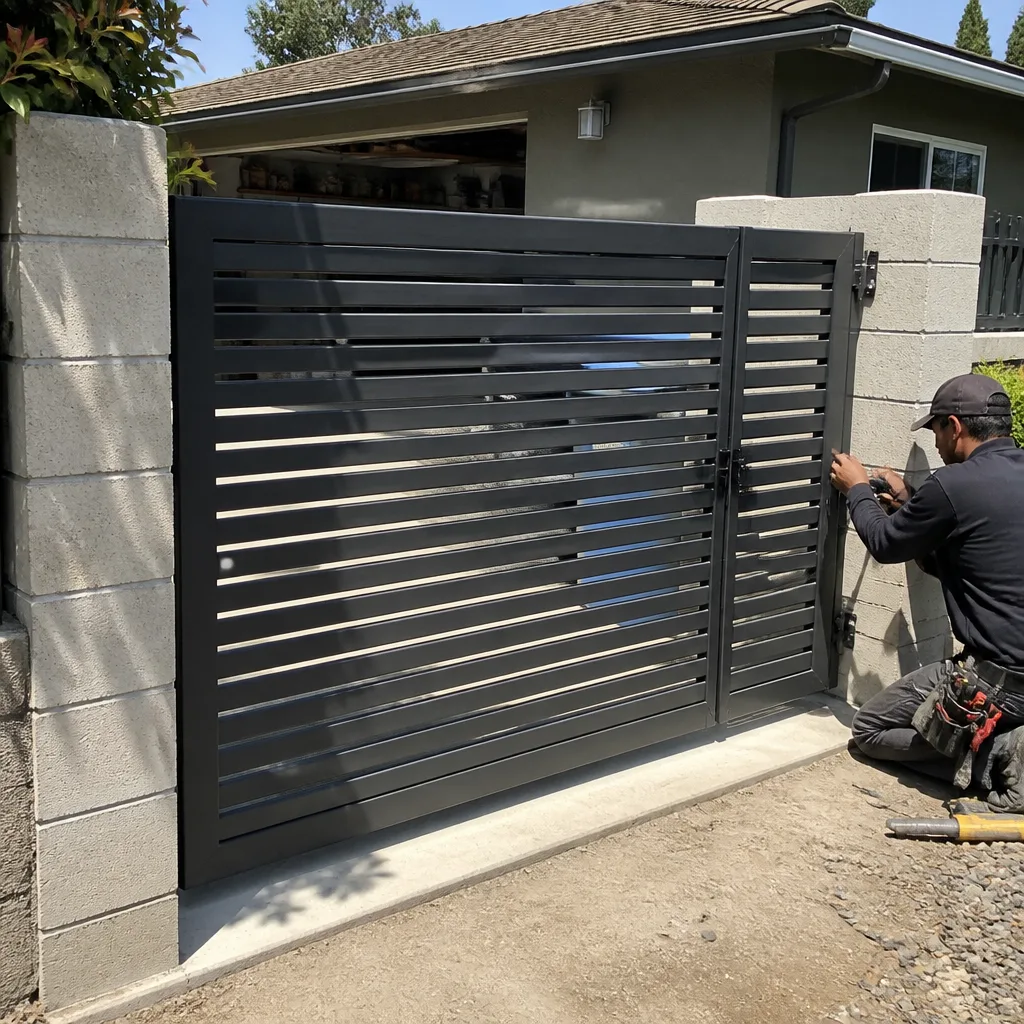 After
After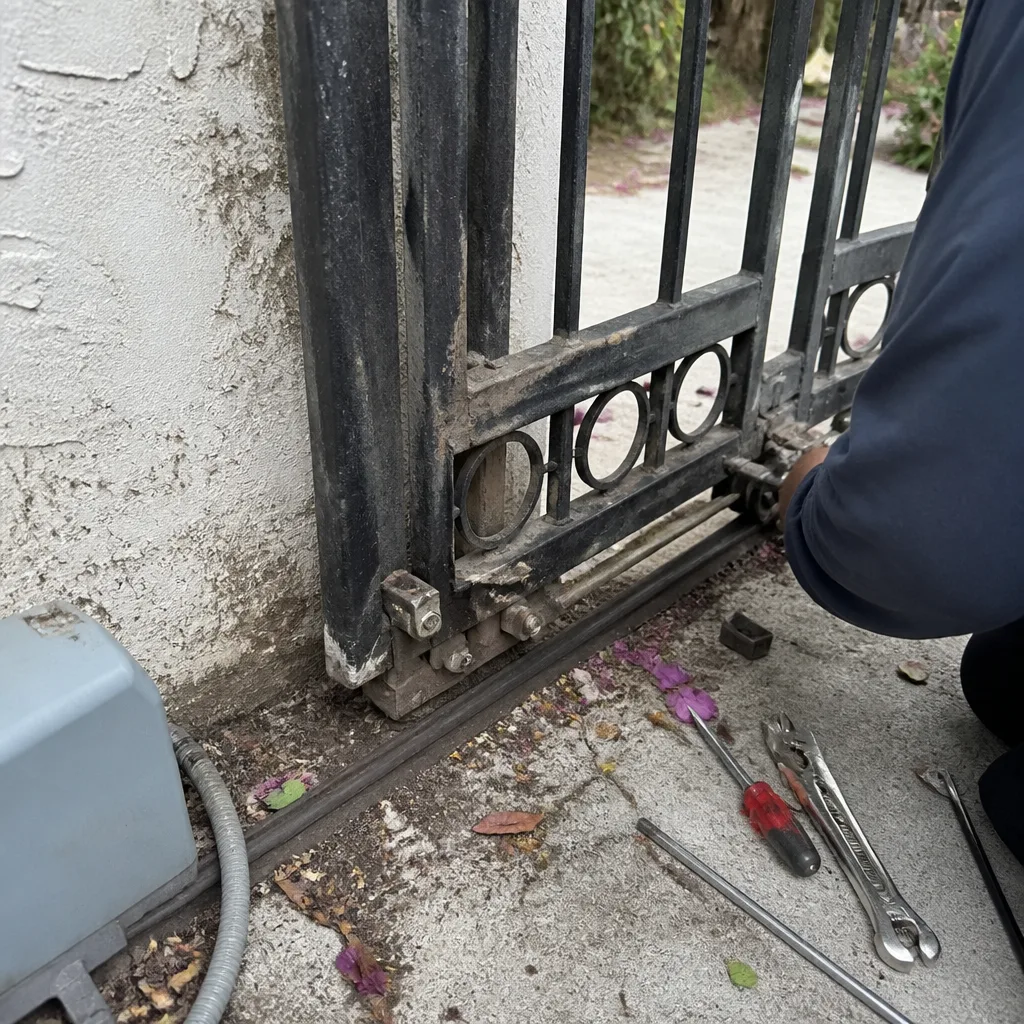 Before
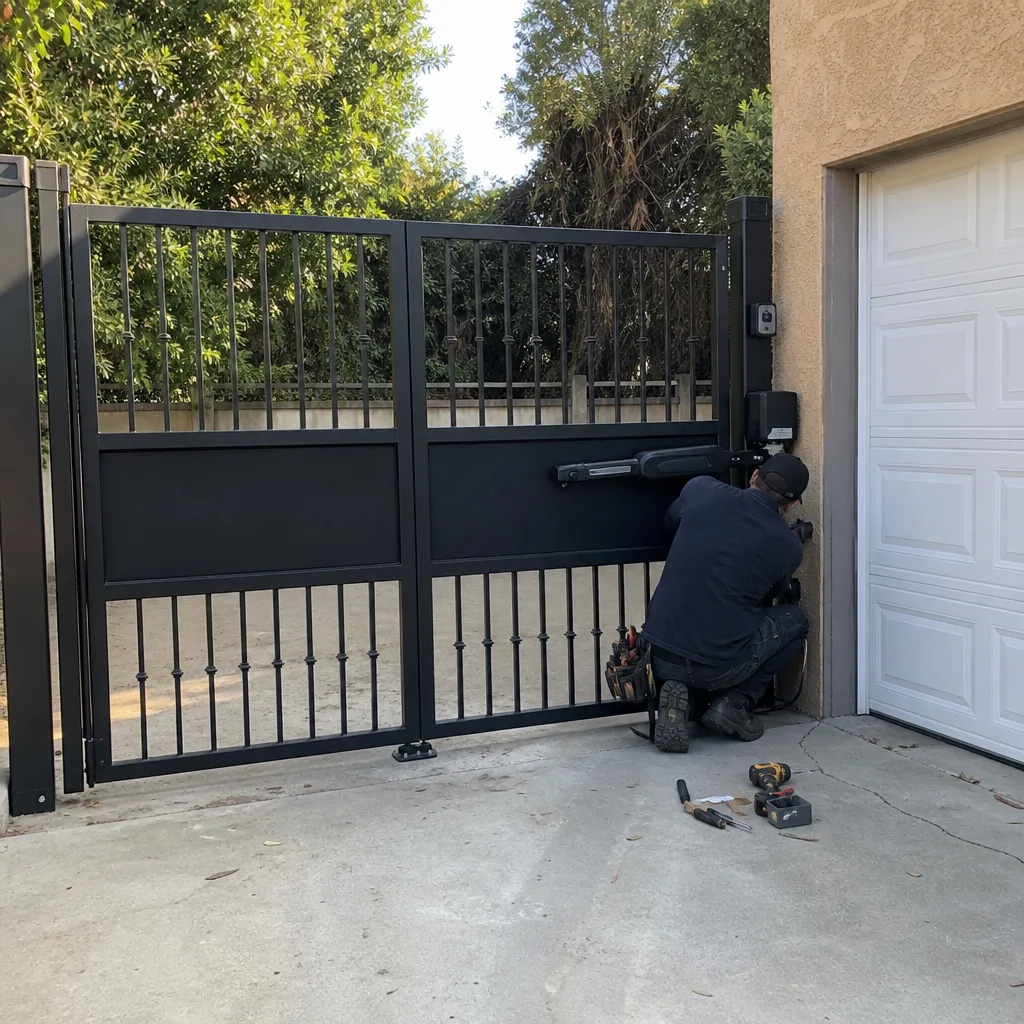 After
After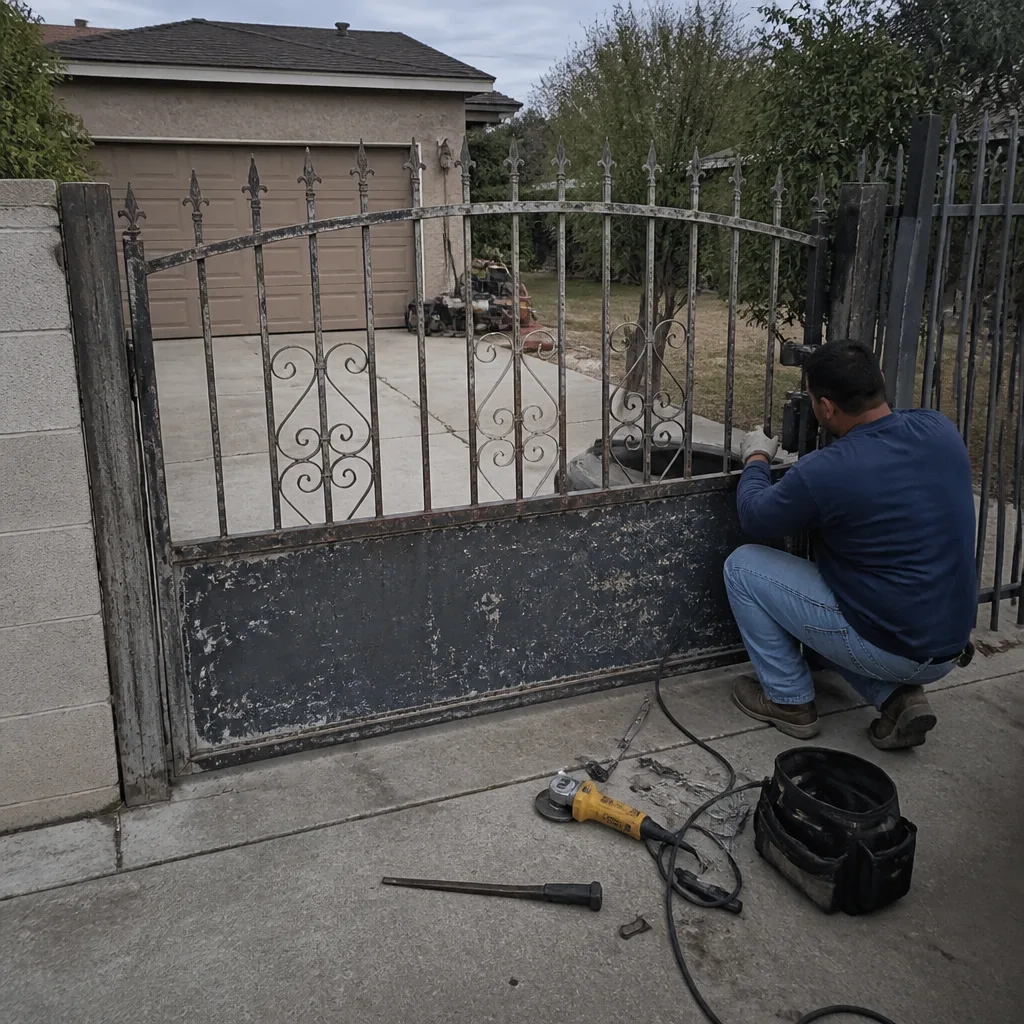 Before
 After
AfterGate Repair Maintenance Checklist for Van Nuys Homeowners
We’ve lost count of the gates in Van Nuys we’ve opened up to find rollers clogged with a gummy, black paste that used to be lubricant. The homeowner did the maintenance. They did it faithfully, every spring, with a can of something from the garage shelf. And in our climate, that’s often worse than doing nothing at all. This checklist is not the generic one you’ll find on a dozen other sites. It’s written for the heat, the Santa Ana winds, and the soil we actually build on here. We’ll cover the month-by-month tasks that matter, the products that belong on your gate and the ones that don’t, and the five-minute inspection that catches most failures before they strand your car in the driveway. You’ll leave with a plan you can follow in about ten minutes a month.
Quick Answer
Van Nuys homeowners should perform a five-minute visual gate inspection once a month, lubricate hinges and rollers twice a year with a dry silicone or white lithium spray (never WD-40), and schedule a more thorough inspection of the motor, brackets, and post footings each spring before the first triple-digit week. The single most important task most homeowners miss is hosing off windblown dust and grit from moving parts after March, before the dry season bakes it into place, because that grit is what wears out rollers and hinge pins faster than anything else in the San Fernando Valley.
Table of Contents
- Why Van Nuys Weather Dictates Your Gate Maintenance Schedule
- The Five-Minute Monthly Checklist (Catches 80% of Problems)
- Exactly Which Lubricants to Use on Which Components (and Which to Never Touch)
- How to Check Gate Alignment with a Dollar-Store Level and a Piece of Chalk
- Santa Ana Wind Season Prep: October Through December
- The Log to Keep on File: A Real Service History for Any Technician
- Common Mistakes to Avoid
- When to Call a Professional
- Frequently Asked Questions
- The Bottom Line
Why Van Nuys Weather Dictates Your Gate Maintenance Schedule
Gate hardware is sensitive to two things: heat and grit. Van Nuys hands you both, every year, on a schedule you can set a clock to. Our summers regularly push past 100 degrees, and that heat does something mechanical parts genuinely dislike: it thins out lubricants until they run off like water, and it expands metal enough to shift alignment by a quarter inch or more. Then the Santa Anas arrive in the fall, blowing fine dust and sand into every roller track, hinge pin, and motor housing in the valley. We’ve watched perfectly good gates grind themselves to a stop because a layer of baked-on dust turned two smoothly rolling wheels into two little drum sander discs.
The soil matters too. Van Nuys sits on alluvial soil that absorbs winter rain and expands, then dries out in summer and contracts. Gate posts set in concrete footings still move, just a little, with that seasonal swell and shrink. It’s rarely enough to see. It’s plenty to change the gap at the latch or throw off the alignment of a safety photo eye. That’s why a maintenance schedule built for Seattle or Atlanta, with their “spring and fall” rhythms, doesn’t tell you much here. Our real seasons are the rainy weeks between January and March, the long dry bake from April to September, and the wind season from October through mid-December. Your gate feels all three.
We build and repair gates in Van Nuys every week, and in our experience the failures cluster at specific times of year. A homeowner who does the right task in the right month avoids about 80% of the calls we run. The rest of this guide is that schedule, month by month and task by task.
The Five-Minute Monthly Checklist (Catches 80% of Problems)
This is the single most valuable habit you can build as a Van Nuys homeowner with a gate. It takes five minutes. It requires no tools beyond your eyes and maybe a rag. Do it on the first Saturday of every month while the coffee is brewing, and you will catch loose brackets, dying batteries, cracking welds, and misaligned tracks before any of them become a repair bill. A gate we service for a customer who does this inspection tends to last years longer between repairs than a gate that gets ignored until it groans.
Here’s the walkaround, in order:
- Stand at the closed gate and look at the top rail. It should be parallel to the ground or follow an even slope. If one end droops lower than the other, you’ve got a hinge or post issue starting. This is the earliest sign of a gate that will eventually drag on the ground.
- Crouch down and look at the gap between the gate and the ground. It should be even from hinge side to latch side. If the latch side is closer to the ground, the gate is sagging. If the gap changes width as the gate swings, the hinges are worn or the post has shifted.
- Swing the gate open and closed one time with your hand. Move it slowly and feel for rough spots, catches, or a spot where it speeds up on its own. A gate that rushes ahead at any point on its arc is telling you the weight distribution is off or a bearing is binding.
- Look at every bolt, bracket, and weld while the gate is mid-swing. We find loose hardware on at least a third of the inspections we do. Bolts on a moving gate work loose over time because the gate vibrates with every cycle. A quarter-turn with a wrench now is cheaper than a snapped bracket later.
- Look at the gap around the latch and strike. If the latch is starting to ride high or low on the post, the gate has shifted and the alignment is changing. This is the point where you do the dollar-store level check we describe below.
Write down anything you find, even if it seems small. And if you find the same thing twice in a row, it’s time to address it rather than note it. A loose bracket this month is a broken weld next month, and broken welds on a moving gate are how you end up with a gate on the ground on a Tuesday morning. Our Gate Repair in Van Nuys page covers what we find on these inspections, and what we recommend doing about it.
Exactly Which Lubricants to Use on Which Components (and Which to Never Touch)
Here’s the truth that saves more gates than any other single piece of advice we give: WD-40 is not a lubricant for gate hardware. It’s a water displacer with some light solvent action and a tiny bit of penetrating oil. Spray it on a roller track in Van Nuys in August and it will strip away what little grease remains, then evaporate, leaving the metal bone-dry and ready to gall. It’s about as helpful as a screen door on a submarine. The same goes for used motor oil, cooking spray, and chain lube from the motorcycle shelf. Gates need specific products on specific parts, and using the wrong one in our heat actively damages the hardware.
Here’s the breakdown we give every Van Nuys homeowner we work with:
- Hinge pins and roller bearings: Use a dry silicone spray or a white lithium grease in a spray can. Apply it twice a year, once in April and once in November. Spray a light coat directly onto the pin or the bearing, then work the gate back and forth a few times to spread it. You want a thin film, not a dripping mess.
- Roller tracks: Clean them with a rag first, and wipe out any gunk. Then use the same dry silicone spray, but spray it on the rag and wipe the inside of the track. Do not spray it directly into the track. Direct spray blows dust into the wet lubricant, and in Van Nuys you’ll have a sand trap inside a week.
- Gate motor chain or belt drives: Use a light machine oil or the specific lubricant recommended by your motor brand. Ghost Controls and Mighty Mule both sell their own drive-specific lubricants, and DoorKing’s chain drives like a heavier chain lube. Check your manual, or bring the manual to us and we’ll tell you what it needs.
- Nothing, on these parts: Do not lubricate the safety photo eye lenses, the motor housing, the circuit board, any electrical connector, or the keypad. Those components need cleaning, not oil. Dust on a photo eye causes false triggers; oil on a photo eye makes it worse, because the dust now sticks.
One more note from years of watching good hardware die young in this town: never use a pressure washer on your gate or its track. The water forces grit into roller bearings and inside the motor housing, and the pressure breaks the seal on sealed bearings. A hose on a normal setting and a soft brush do the same job without the damage. If you see rust starting on a hinge or bracket, clean it with a wire brush and touch it up with a cold galvanizing spray from the hardware store. Do that in April, before the heat cures the rust into scale.
How to Check Gate Alignment with a Dollar-Store Level and a Piece of Chalk
You don’t need a laser level or a contractor’s price tag to check whether your gate is hanging straight. You need a level that costs nine dollars and a stick of sidewalk chalk you can buy for a dollar more. Here’s how to use them, and what the results mean.
- Close the gate and engage the latch if it has one. You want to check the gate in its resting position, not mid-swing.
- Hold the level vertically against the hinge-side edge of the gate, right where the gate meets the hinge post. Note where the bubble sits. If it’s centered, the hinge post is still plumb. If it’s off, make a mental note of which direction and how much.
- Now hold the level horizontally across the top rail of the gate, about halfway between the hinges and the latch. If the bubble is centered, the gate is level. If it runs toward the latch side, the gate is sagging at the latch. If it runs toward the hinge side, the hinge side has dropped.
- Take your piece of chalk and draw a short vertical line on the hinge post at the top edge of the gate. Then draw another one at the bottom. These are your reference marks. Next month, if the top edge of the gate no longer lines up with your chalk line, you know the gate has moved. You’ve just created a datum line.
- Open the gate halfway and let go. If a properly adjusted gate with working bearings stays where you left it, and yours drifts open or shut on its own, you have an alignment or bearing issue. Show me a gate that closes on its own and I’ll show you a gate failing somewhere. That drift is the first visible symptom of a post that has moved, a hinge that has worn, or a gate that was hung out of plumb to begin with.
If your chalk reference marks move from month to month, that’s not something to ignore. A gate sags in the hinge post, not in the middle, and that is where we start. Fix the panel without the post and you’ll fix it twice. If you run this check and your marks shift, give us a call and we’ll tell you over the phone what we think is happening before anyone drives out. Our Gate Installation in Van Nuys page explains how we hang gates properly so they stay where the chalk says they are.
Santa Ana Wind Season Prep: October Through December
If Van Nuys gates had a single natural enemy, it would be the Santa Ana winds. They arrive every fall, they blow hard for days at a stretch, and they carry the finest grit the Mojave has to offer. A gate that operates perfectly in September can be binding and grinding by Thanksgiving if you haven’t prepped for the wind. Here’s the routine we recommend for October, before the first big blow, and the checks to run after each wind event.
In early October, do this:
- Clean every moving surface with a dry rag. Remove all dust, old lubricant, spider webs, and the crusty buildup that accumulated over the summer. Be thorough on the roller track, because this is where summer grit collects.
- Lubricate the hinge pins and roller bearings with a dry silicone spray or white lithium grease. Apply a thin coat, not a soaking. Work the gate back and forth to spread it.
- Check the condition of the gate’s wind bracing or any anti-sag hardware. Long driveway gates in Van Nuys that run on a steel track take a beating from wind load. Look for cracks in the bracing, loose U-brackets at the roller carrier, and any place where the gate metal itself is flexing.
- Test the gate operator’s force settings, if the operator has adjustable force. Wind pushing against the gate while it’s opening adds load on the motor. If the force setting is borderline now, it will trip the safety reverse in a 40-mph gust. DoorKing and Elite operators both have adjustable force limits. Your manual will explain how to set them, or we can do it for you during a service call.
- Remove anything that can become a projectile. This isn’t gate hardware, but it’s a Van Nuys wind-season fact: the patio umbrella, the trash can, the child’s plastic slide. We’ve seen more than one gate photo eye knocked out of alignment by a flying recycling bin. Now’s the time to tie down or stow anything the wind can pick up.
After each major wind event, do a quick version of the five-minute monthly check. Pay special attention to the photo eye alignment and the gate’s path along the track. Wind-driven grit settles into the track and the gate compacts it as it rolls, which can lift the gate slightly and throw off the latch. A quick wipe-out after a windy week is cheap insurance against a stuck gate on a morning you’re already late.
The Log to Keep on File: A Real Service History for Any Technician
Here’s something most homeowners never think about until it’s too late: a gate is a long-term piece of machinery, and like any machine it has a history. That history lives in your memory until the day you sell the house or the day a new technician shows up and asks, “Has anyone looked at this before?” The homeowner who keeps a simple gate service log saves themselves real money, because the technician who can see what was done, and when, doesn’t have to guess. And guessing is expensive.
We recommend a simple spiral notebook or a note on your phone. Here’s what to write down every time you do anything to the gate:
- The date. Every entry starts with this. You’d be surprised how often a repair is misdiagnosed because nobody knows whether the last service was six months ago or three years ago.
- What you did. “Lubricated hinges with white lithium spray” or “Cleaned roller track” or “Adjusted latch strike.” Be specific enough that a stranger could understand it.
- What you noticed. “Gate slightly slower in the last two feet before closing” or “Rust starting on the lower hinge bracket.” These are the notes that save a technician an hour of hunting.
- Any parts replaced, with brand and model if possible. “Replaced two rollers. Brand: generic from hardware store.” When we show up and see what’s on there, it tells us a lot about the gate’s overall condition.
- Any professional service work done. Date, what was fixed, who fixed it, and any warranty in place. If the technician gave you a receipt, staple it in or photograph it into the phone note.
If you sell the house, leave the log with the new owner. It tells them the gate was cared for and it tells them who to call. If you ever need to call us, the log means our first conversation is grounded in facts instead of a fuzzy recollection. “It made a noise last spring” is a lot less useful than “The gate made a grinding noise for two weeks in March 2025, then stopped after we cleaned the track.” Your log turns a phone call into a diagnosis.
Common Mistakes to Avoid
In twenty-plus years of working on gates in Van Nuys, we’ve seen the same mistakes over and over. None of them are malicious. Most of them come from good intentions paired with house-brand hardware store advice. Here are the ones that cost our customers the most money:
- Using WD-40 as a lubricant. As we said above, it strips existing lubrication and evaporates in Van Nuys heat. If the gate is squeaking and WD-40 makes it stop for a day and then the squeak comes back louder, what happened is that the WD-40 washed out the remaining grease. Now the metal-on-metal wear accelerates.
- Ignoring a sagging gate because it still opens and closes. A gate can sag for a year before it fails. During that year, the top hinge bracket takes the load of the entire gate hanging off its bolt. When it fails, it doesn’t fail slowly. It snaps, and then the gate is on the ground and the post is likely damaged too. Fix a sag early and it’s a hinge adjustment. Fix it late and it might be a new gate post.
- Running the gate with a battery backup that’s been dead for months. Solar gate operators and battery-backup systems both gave us false confidence at some point. If the battery is dead and the operator is running on wall power only, the operator is working harder than it should be and the battery is often the part that protects the motor during a voltage drop. A dead battery left in the circuit can also corrode and damage the control board. Replace it when it tests bad.
- Painting over rust without treating it first. Rust needs conversion. Paint is just a hat. Scrape, wire brush, apply a rust converter, prime if the bracket is worth saving, then paint. In Van Nuys’s dry air, a properly treated bracket will last for years. A painted-over rusty one will flake in eighteen months.
- Spraying lubricant into the motor housing. We’ve pulled open motors with a half-inch of oil sitting in the bottom, and every wire in there swimming. The motor is sealed for a reason. Keep all spray lubricants away from it.
- Adjusting the gate limit switches to “make it close faster.” The limit switches tell the motor where to stop. They don’t control speed. Twisting them changes where the gate stops, which can bend the gate against its stop or let a chain-drive carriage run off the end of the rail. If the gate seems slow, the motor is working against resistance: a dry roller, a low battery, a misaligned rail. Find the resistance; don’t fool the switch.
- Doing heavy maintenance right before selling the house and not keeping records. A new buyer appreciates a working gate. A new buyer who has no idea what was recently replaced can’t maintain it. Leave your log. It’s a selling feature, not an admission of prior problems.
When to Call a Professional
Some gate jobs are homeowner tasks. Replacing a battery, wiping a track, tightening a bolt, running the monthly check. Those are yours. But there’s a clear line, and crossing it with a socket set and YouTube open in the garage is how good gates get ruined. If the gate has come off its track, if a hinge or bracket is cracked or the weld has separated, if the gate post itself moves when you push on it, or if the operator makes a grinding sound, that’s the line. Those jobs need a welder and someone who’s done it more than once. High-tension hardware on gates, particularly the springs on cantilever slide gates, is under enough stored energy to hurt you badly. That’s not a DIY job, and a real professional will tell you so.
If any of the chalk reference marks you set have moved, if the gate binds in one spot no matter how much you clean the track, or if the operator trips its safety reverse in the same spot every time, call before it gets worse. Gatewood Fence & Gate offers free estimates in Van Nuys - call (951) 749-5734 and we’ll put it in writing before we touch a wrench. We are the Gatewood Fence & Gate home team that has been fixing gates here since 2001, and our 90-Day Done Right Promise means if it’s not done right, we make it right. One call brings us back, no runaround.
Frequently Asked Questions
A homeowner’s annual maintenance, if you do the monthly inspections and twice-yearly lubrication yourself, costs about $30 to $50 in supplies: a can of dry silicone spray, a can of white lithium grease, a wire brush, and some cold galvanizing paint. Professional maintenance service in Van Nuys typically runs from $150 to $350 depending on the gate type and motor, and it includes cleaning, lubrication, alignment checks, force testing, and a written condition report. Call (951) 749-5734 for an exact quote - estimates are free.
Lubricate hinges and roller bearings twice a year, once in April before the summer heat and once in November after the first Santa Ana wind events. In Van Nuys’s climate, summer heat thins lubricants and fall winds load the gate with grit, so the April-November rhythm keeps the gate protected through both stress seasons.
Dry silicone spray is the safest all-purpose choice for one simple reason: it leaves a dry film that doesn’t attract dust. White lithium grease works well on bearings but it stays slightly tacky, which in Van Nuys means it catches windblown grit. Either one will work; in our experience, dry silicone is the better fit for our local conditions.
In many cases, yes. We keep the most common parts for LiftMaster, FAAC, BFT, Linear, Viking, Ghost Controls, DoorKing, Elite, and Mighty Mule on the truck, and we weld on site so a broken bracket or a separated weld doesn’t mean hauling the gate to a shop. Same-day service depends on what we find, but a live person answers our phone around the clock and we’ll tell you straight what to expect before anyone drives out. Call (951) 749-5734.
Sagging gates and dry, gritty roller tracks. The sag usually starts in the hinge post, not in the middle of the gate; the gate’s weight acts on the top hinge bracket, and whatever is buried under that post decides how long the bracket holds. We see it often in neighborhoods where the soil shifts with winter rain and summer drought. The dry, gritty tracks are pure Van Nuys wind season. Both are straightforward to catch early with the monthly inspection in this guide, and both are cheaper to fix early than late.
Yes. A proper maintenance service includes the gate motor and opener: we clean it, check the drive belt or chain, test the force settings, verify the limit switch positions, and inspect the wiring and battery. That’s the part of the system that most often gets skipped in a “lube and go” maintenance call. Our full Gate Motor & Opener in Van Nuys page covers the operator side of the system in detail.
Run the five-minute monthly check, clean the track, and test the operator. If you’re leaving for more than two weeks during Santa Ana season or right after, have someone run the gate once or twice while you’re gone, or leave it parked in the open position if security allows. The part we worry about is a gate that sits still for a month with grit in the track and then tries to move on the first day you’re back. If it hasn’t been serviced in a while, schedule a maintenance visit before you leave - it’s cheaper than a repair the week you get home.
The Bottom Line
A gate in Van Nuys doesn’t need constant attention. It needs the right attention at the right times. Five minutes of visual inspection once a month. Two lubrication sessions a year, using dry silicone or white lithium and never WD-40. A dollar-store level and a chalk line to know if your gate is moving. A wiped-clean track in October, before the winds. A notebook where all of it gets written down. Do these things and your gate will last years beyond the average, and when it does need work, you’ll catch it while it’s a bracket instead of a post. Skip them and the gate will make the schedule for you, usually at seven in the morning on a day you cannot be late. We’ve been fixing gates in Van Nuys since 2001, and we’d rather help you keep yours running than see you after it’s on the ground.
Written by Hal Gatewood, Owner at Gatewood Fence & Gate, serving Van Nuys since 2001.