
Last updated August 26, 2026
Free on-site gate assessment - hinges, posts, and your LiftMaster or Nice gate operator checked before anything is quoted
The assessment is free and the quote is the invoice.

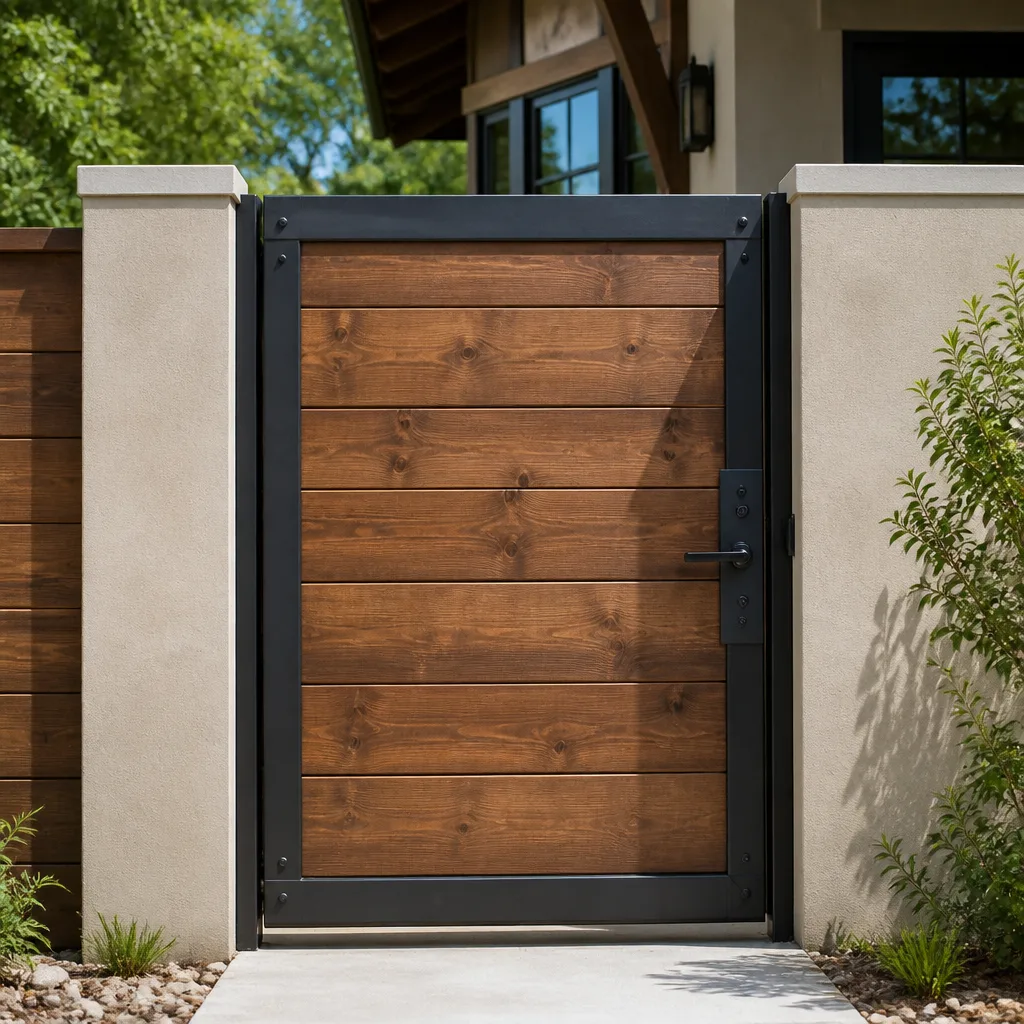
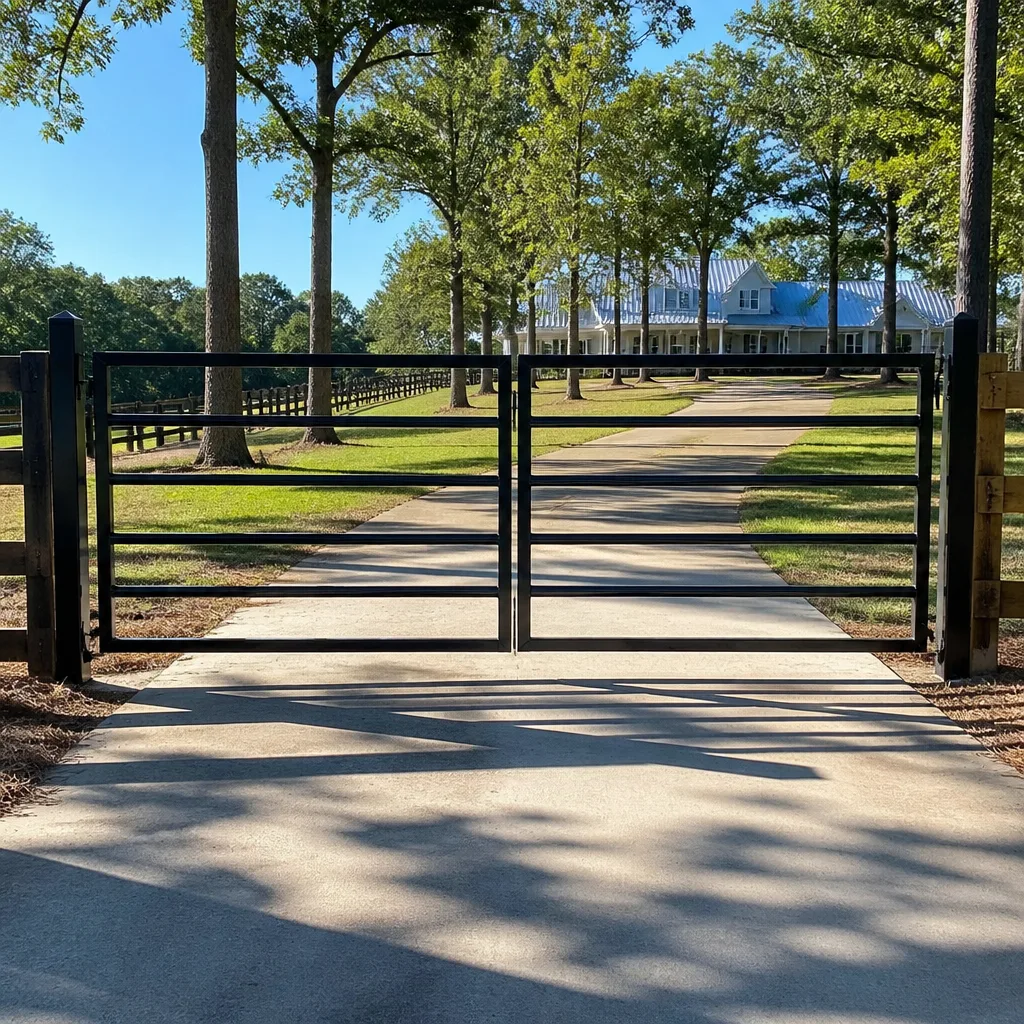
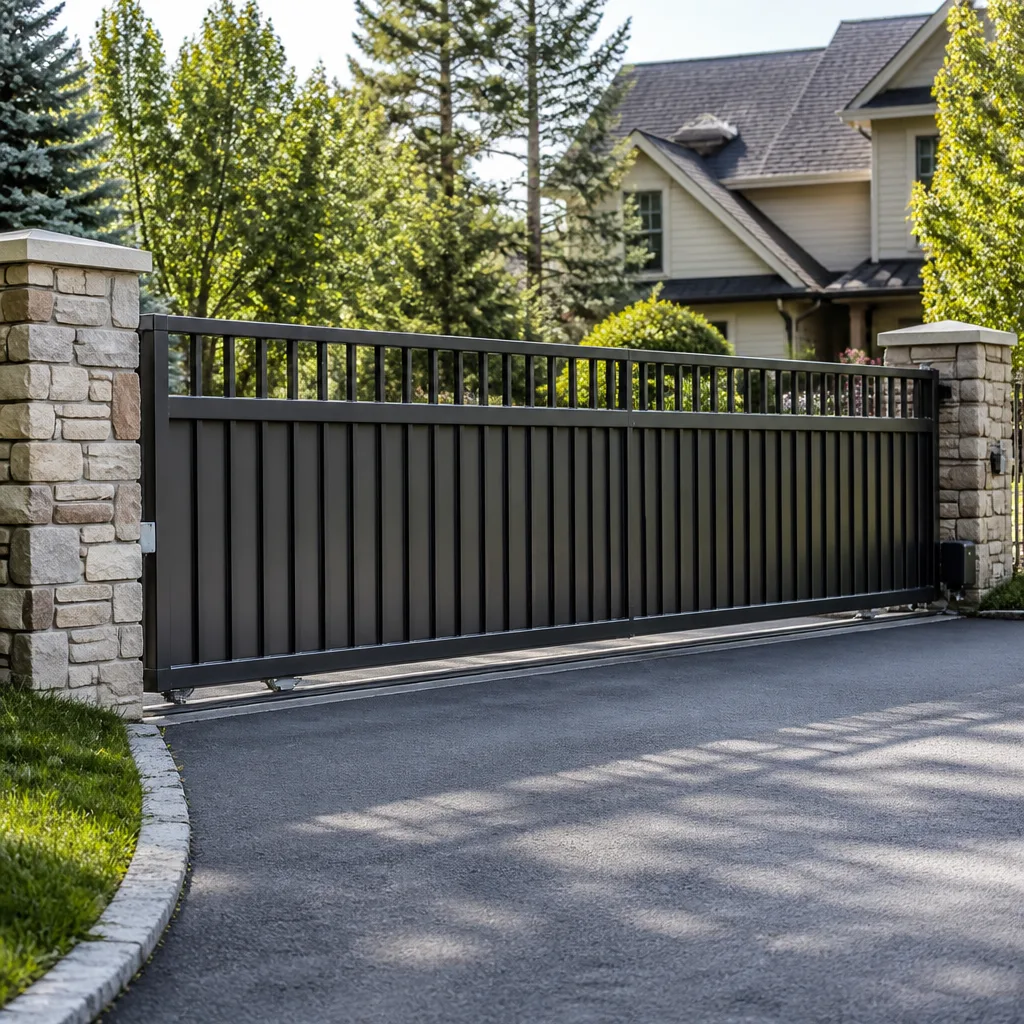
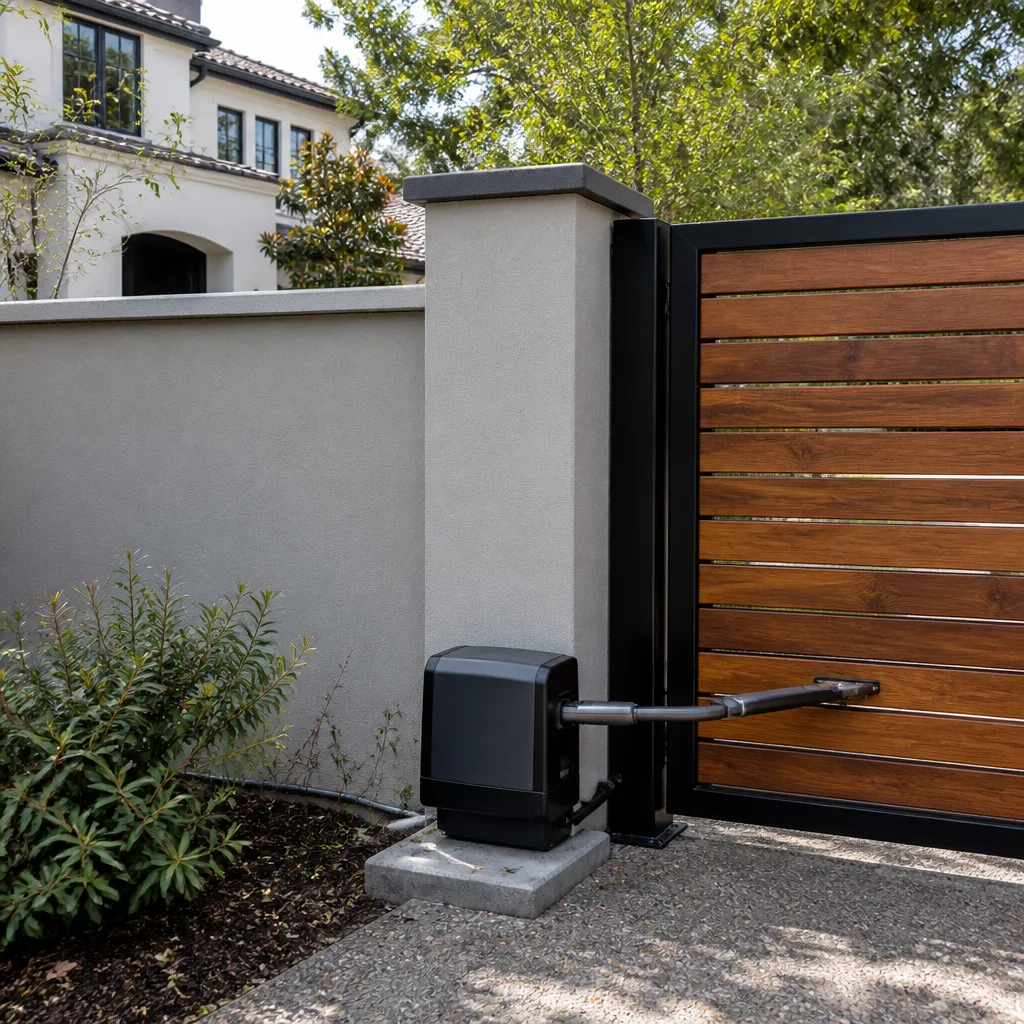
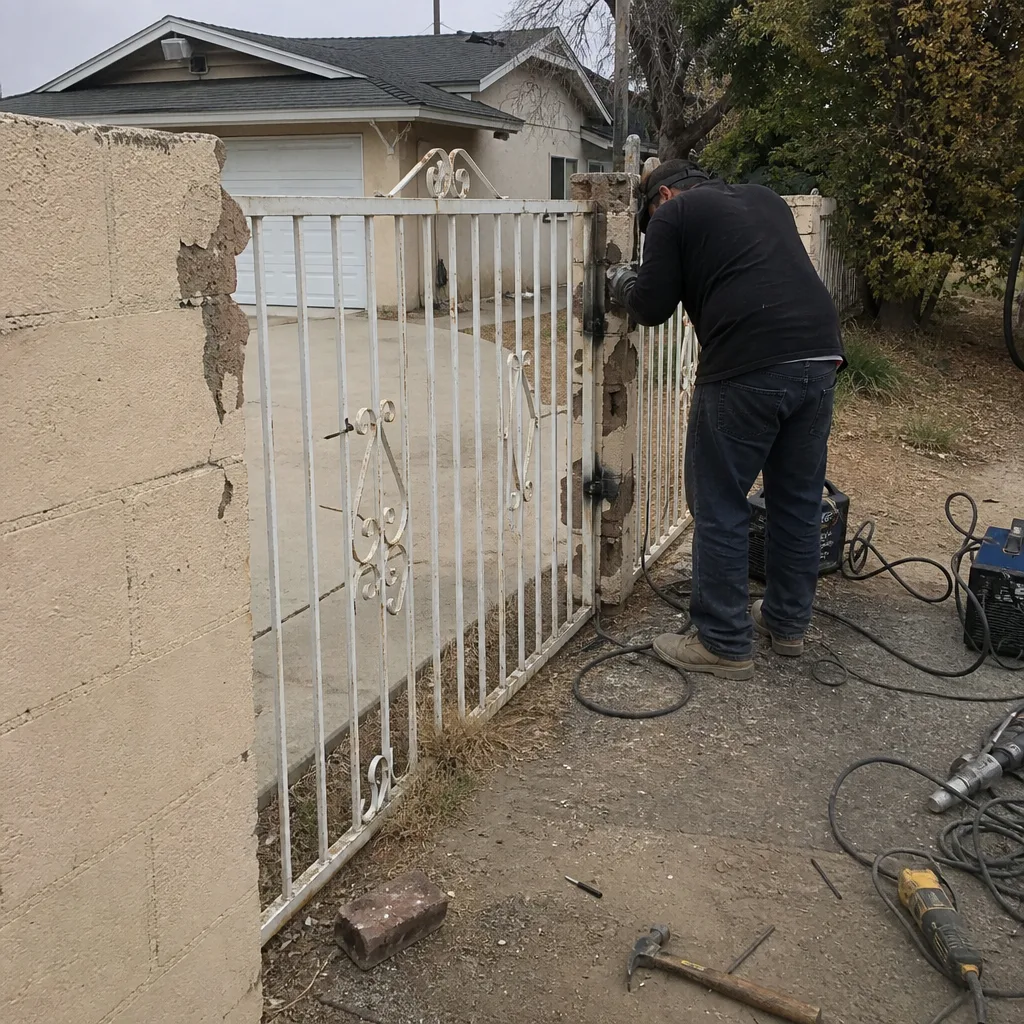 Before
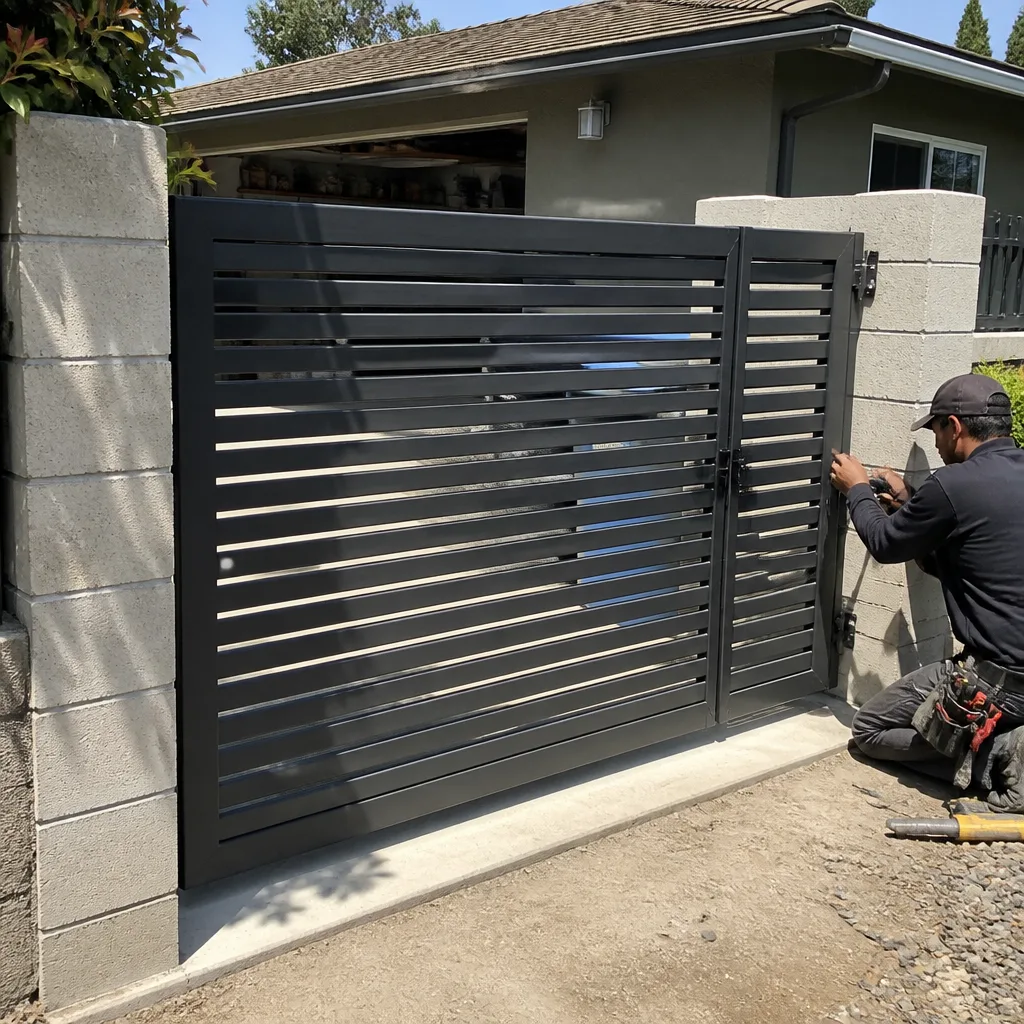 After
After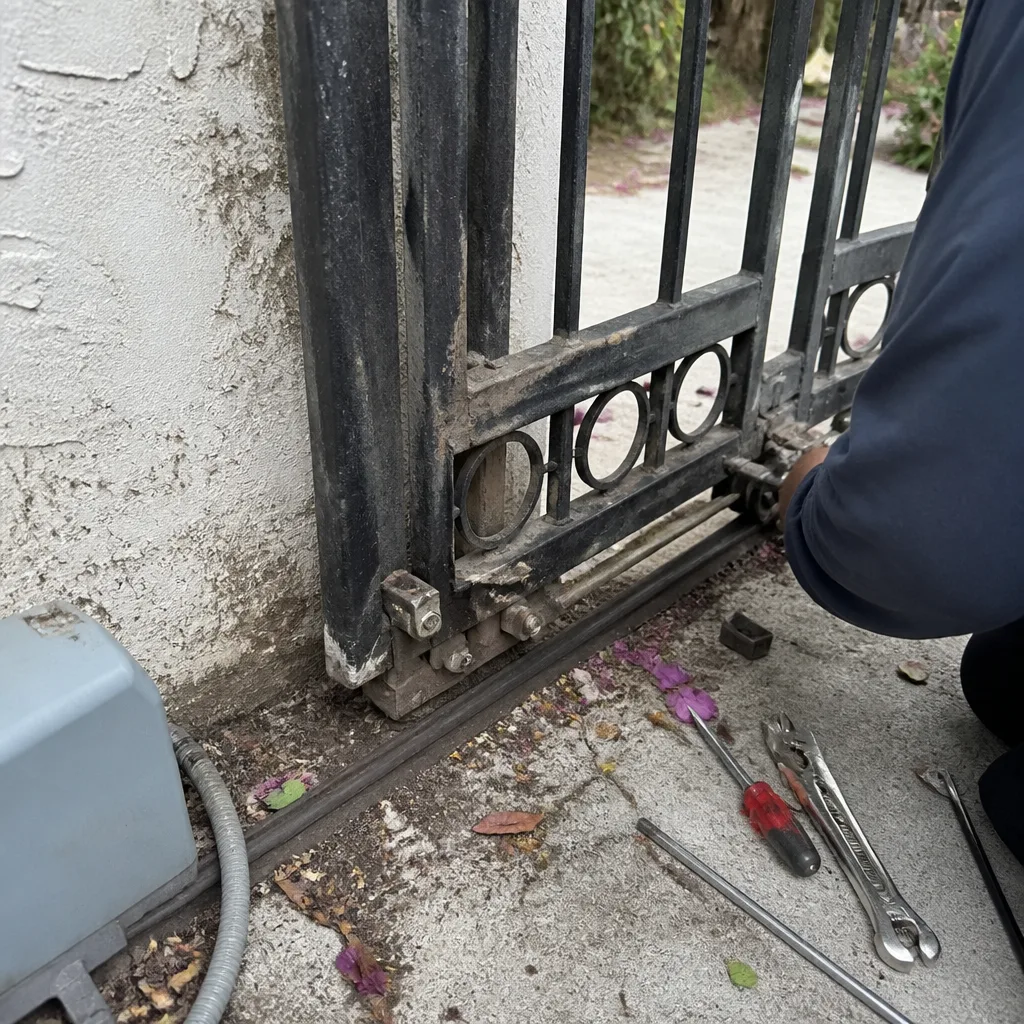 Before
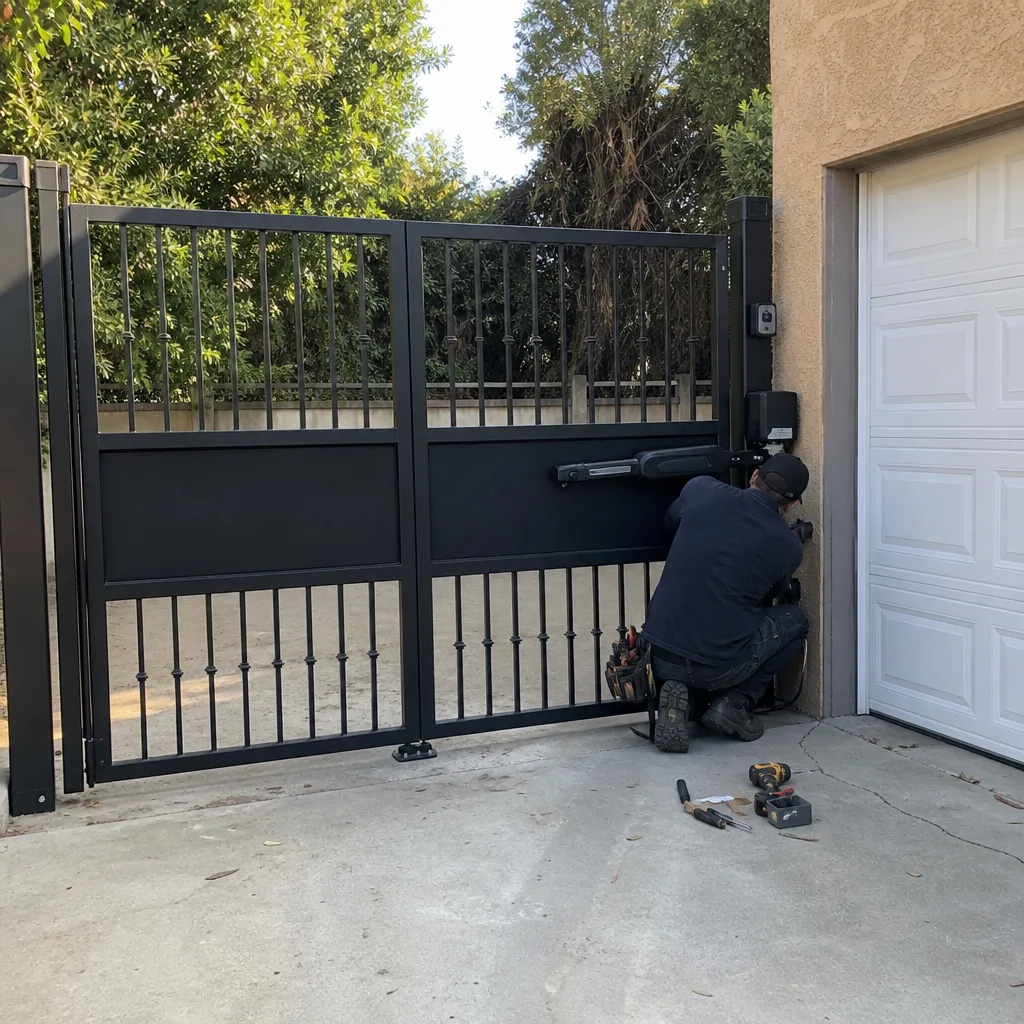 After
After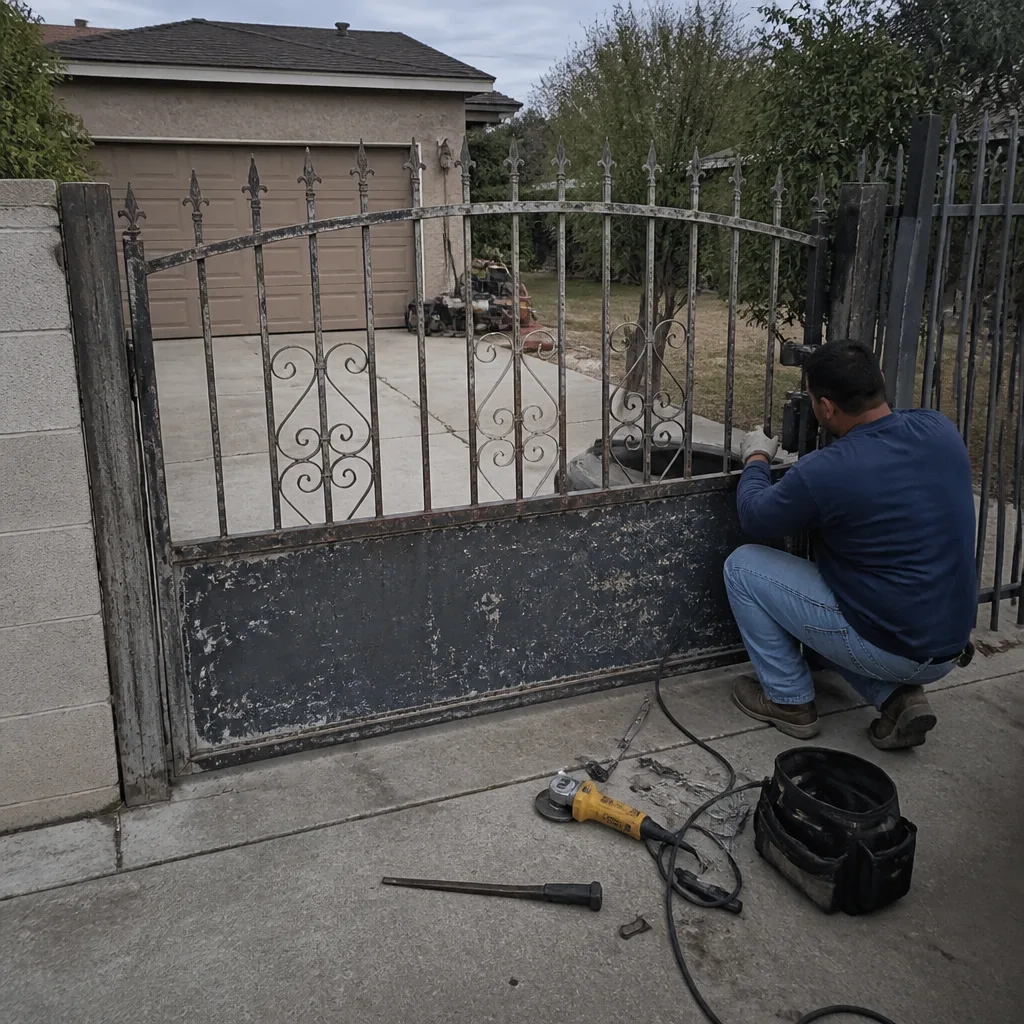 Before
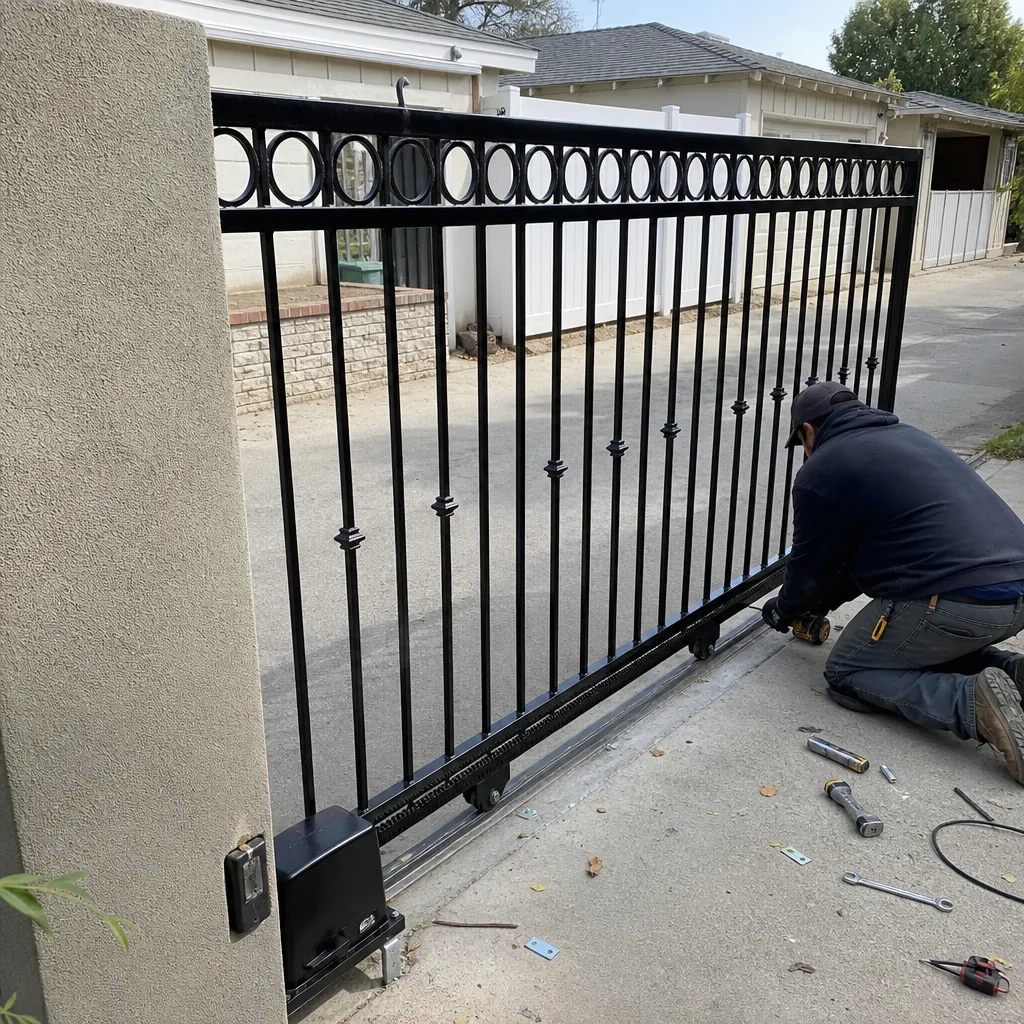 After
AfterGate Repair Warning Signs: A Van Nuys Homeowner’s Reference Guide
A gate that reverses for no visible reason isn’t “glitchy.” It’s telling you something specific about either the safety sensor alignment or the operator’s torque limit. Ignoring that message long enough turns a thirty-dollar adjustment into a three-hundred-dollar repair. Most Van Nuys homeowners don’t have a bad gate; they have a gate that’s been talking to them for weeks, and nobody taught them the language. This guide gives you that vocabulary: the twelve warning signs that matter, what each one means mechanically, how urgent it really is, and when to call someone who works on gates for a living rather than someone who just wants to sell you a new one, or explore our Gate Repair services for expert help.
Quick Answer
The most common gate repair warning signs in Van Nuys are: a gate that reverses or stops mid-cycle, grinding or popping sounds during operation, a panel that drags or sticks in one spot, visible weld cracks, rust blooms at joints, and a motor that works fine most days but fails in heat. Any one of these is a fixable problem if you address it within the first two weeks; any of them left alone for six months turns into a repair that costs three to five times more and often takes the opener down with it.
Table of Contents
- 1. The Gate That Reverses for No Reason
- 2. Three Sounds That Mean Stop Using the Gate
- 3. Uneven Drag and the “Sticking Point”
- 4. The Hairline Weld Crack You Walk Past Every Day
- 5. The Gate That Only Fails When It’s Hot
- 6. Rust Blooms and What They Reveal
- 7. Sensor Problems That Aren’t Sensor Problems
- 8. The Urgency Timeline: What to Fix Now vs. What Can Wait
- 9. What You Can Safely Check Yourself (and What You Shouldn’t Touch)
- Common Mistakes to Avoid
- When to Call a Professional
- Frequently Asked Questions
- The Bottom Line
1. The Gate That Reverses for No Reason
A gate that reverses mid-cycle or refuses to close all the way is sending one of three messages. The first is the simplest: the safety sensor at the base of the gate has drifted out of alignment, so the operator thinks something is in the path. The second is that the torque limit on the operator has been set too low, which happens when someone installs an opener without accounting for the actual weight of the panel and then compensates by cranking the sensitivity. The third, and the one we see most often in Van Nuys, is that the gate itself has gotten harder to move, usually from a failing hinge or a post that’s started to lean, and the opener is tripping its own safety circuit because it’s working harder than it was designed to.
Here’s how to tell which one you’re dealing with before you call anyone:
- Put the gate in manual release mode (every operator has a release handle or key). Push the gate open and closed by hand.
- If it moves freely and smoothly for the full arc, your problem is electrical: sensor alignment or a torque setting, and it’s a quick service call.
- If it’s hard to start moving, or it binds at a specific point in the arc, your problem is mechanical: hinge, post, or wheel. The opener is the victim here, not the culprit.
- If it’s hard to move everywhere, you’ve got multiple issues compounding, and you’ll save money fixing them together rather than one at a time.
A gate that reverses “sometimes” is not a sometimes problem. It’s a symptom with a cause that is getting worse. The Gate Repair in Van Nuys calls we take that start with “it only does it occasionally” are almost always the ones that end with “now it won’t close at all.” Fix the sometimes problem and you never meet the always problem.
2. Three Sounds That Mean Stop Using the Gate
Gates make noise. That’s normal. A well-maintained chain-drive opener has a steady mechanical hum, wheels make a low rumble on the track, and a swing gate closing against its stop produces a solid thunk. Those sounds are fine. But there are three specific sounds that mean stop using the gate and call someone today, because every additional cycle is doing damage.
The pop or snap. If you hear a sharp popping sound from the gate or opener, it’s usually a chain jumping a tooth on a sprocket, a cable strand breaking on a cable-driven operator, or a weld giving way. A chain that jumps once will jump again, and when it does, the gate can free-fall or slam. A broken weld that’s still holding the gate up is on borrowed time. This is the sound of something structural failing, not wearing.
The grind. A grinding or metal-on-metal scraping sound from the opener means the gear teeth are wearing or the drive shaft bearing has failed. LiftMaster and FAAC openers both use sealed gear assemblies, but once the seal fails and dust gets in, the gears eat themselves. A grinding opener will run for a while, but it’s running itself to death, and a replacement gear set is cheaper the earlier you catch it.
The shriek. A high-pitched squeal or shriek from the hinge area is dry metal on metal: a hinge pin that’s lost its lubricant and is now wearing through the hinge barrel. This is the most common noise we hear on older wrought-iron gates in Van Nuys, and it’s the cheapest fix of the three. But left alone, the hinge pin eventually seizes or the barrel wall wears thin and the gate drops a quarter inch on that corner, which starts the drag problem we’ll get to next.
Normal gate noise is consistent and steady. These three are not. If the sound changes from day to day, or if it’s getting louder, that’s the gate telling you something is actively wearing. Listen to it.
3. Uneven Drag and the “Sticking Point”
When a gate drags on the ground or sticks in one spot along its travel, a lot of homeowners assume the gate “settled” or the ground heaved. Sometimes that’s true. But drag and sticking are usually specific diagnoses hiding in plain sight, and the location of the drag tells you which one you have.
Drag at the latch end, gap at the hinge end: This is a hinge post issue. The post has started to lean outward under the weight of the gate, which drops the free end of the panel. Fixing the panel won’t help; the post has to be reset, reinforced, or replaced. In Van Nuys, where a lot of driveways were poured decades ago and the surrounding soil expands and contracts with the wet-dry cycles, hinge posts lean more than people think. A gate sags in the hinge post, not in the middle, and that is where we start.
Drag in one specific spot, smooth everywhere else: This is usually a wheel problem on a sliding gate, or a hinge that’s seized and the other hinges are flexing to compensate. On rolling gates, a flat-spotted wheel or a bent track section creates a hard spot that feels like a sticking point. The gate wears on that one spot every single cycle, and the spot gets worse fast.
Drag everywhere, but only when opening: This is often an operator alignment problem. When a slide gate operator is mounted even slightly off-axis from the gate’s travel, the drive chain or rack pulls the gate sideways into the track. The gate fights itself the whole way. This one is deceptive because the gate is fine; the installation is not.
Each of these has a different fix and a different price tag. A stuck hinge is a thirty-minute job. A leaning post might require cutting the post out of the concrete, resetting it, and re-hanging the gate. The point is: the symptom tells you where to look. Where the gate sticks tells you what to fix.
4. The Hairline Weld Crack You Walk Past Every Day
Weld cracks are the quietest warning sign on this list because they don’t make noise and they don’t change how the gate operates until the day they do, and when they do, it’s sudden. A hairline crack in a weld on a gate hinge, latch post, or frame joint is like a crack in a windshield: it’s small right up until the moment it isn’t, and the transition is not gradual.
Here’s the five-point visual check you can do in two minutes without tools:
- Look at the weld joints where the vertical pickets meet the horizontal rails. Cracks here show up as a dark, jagged line against the lighter paint or powder coat.
- Check the six inches of frame on either side of each hinge plate. This is the highest-stress zone on a swing gate, and cracks here are the most common failure point we see in Van Nuys.
- Inspect the latch post where the latch bar meets the post body. A gate that gets slammed or caught by wind stress loads this joint every time it closes.
- Run your eyes along the bottom rail, especially at each end. Water sits here, rust starts here, and the weld is the first thing to fail.
- Look at the corners of the gate frame. A square frame corner that shows a hairline crack means the gate is racking, which means something above the corner (usually a post) is moving.
Most of these cracks are repairable by welding on site, which keeps the gate in your driveway and keeps the repair to a couple of hours. Ignoring them means the crack propagates through the weld and into the surrounding metal, and what started as a six-inch weld repair becomes a panel rebuild. That’s the difference between a service call and an Gate Installation in Van Nuys job, which is a much longer and more expensive conversation.
5. The Gate That Only Fails When It’s Hot
Van Nuys summers stress gate systems in a specific way, and a gate that works fine every morning but quits in the afternoon heat is not being temperamental. For year-round maintenance tips, see our guide on Seasonal Gate Repair Care for Van Nuys: Year-Round Homeowner’s Guide. It’s carrying an electrical problem with a specific diagnosis.
Heat increases electrical resistance. It also causes expansion in circuit boards, solder joints, and relay contacts. A marginal solder joint on an operator control board that connects fine at 70 degrees can separate enough at 95 degrees to interrupt the circuit. The gate stops. It resets when everything cools down. Then it works again the next morning, and the homeowner assumes the gate fixed itself. It didn’t. The joint will separate further each time, and eventually it fails permanently, usually at the exact moment the gate is needed most.
The second heat-related failure is the motor capacitor. Capacitors age, and heat accelerates the aging. A weak capacitor can’t deliver enough starting torque to get a hot motor spinning under load, so the operator hums and trips its thermal overload. This is common on older BFT and Linear openers that have been in service for eight or ten years. The capacitor is a fifteen-dollar part and a ten-minute swap. The thermal overload trip, ignored long enough, becomes a burned-out motor winding, which is a new operator.
The third one is the gate itself. A metal gate expands in the heat. A gate that was built to tight clearances, or has shifted slightly, can bind against its own frame or the catch post when the panel expands half an inch in a hundred-degree afternoon. This is a purely mechanical problem, but it only shows up on hot days, which makes people think it’s electrical.
If your gate only fails in heat, the problem is real and progressive. It will not resolve on its own. And every failure in the heat of a Van Nuys summer is a security gap and a driveway blocked at the worst possible time.
6. Rust Blooms and What They Reveal
Rust on a gate is never just cosmetic. A rust bloom at a weld joint or a bolt hole tells you water is getting into a seam that should be sealed, and that water is working on the metal from the inside. You can paint over surface rust; you cannot paint over structural rust and expect it to hold.
Here’s what different rust locations tell you:
- Rust at the base of pickets: Water is wicking up from wet ground or irrigation overspray. This rust travels upward inside the picket, and by the time it’s visible at the base, the bottom two inches of the picket are often compromised.
- Rust at horizontal rail joints: The weld or fastener joint has a capillary gap, water sits in it, and rust is expanding the gap. This is where racking starts.
- Rust around the hinge plates: The highest-stress, highest-moisture zone on the gate. Rust here plus the cyclic loading of the gate opening and closing is the recipe for a hinge that rips out of the post.
- Rust on the op erator housing: The seal has failed and the internal electronics are getting moisture. A rusty operator housing in Van Nuys often means corroded terminals inside, and intermittent electrical gremlins are not far behind.
The fix depends on how deep the rust goes. Surface rust can be ground back, treated, and repainted. Rust that’s flaked through the metal wall means the section needs to be cut out and replaced, which is a welding job. We do that in the driveway. The earlier you catch a rust bloom, the more likely it’s a surface fix and not a structural one.
7. Sensor Problems That Aren’t Sensor Problems
Photo-eye safety sensors get blamed for a lot of gate failures they didn’t cause. The sensor’s job is simple: if the beam between the two photo-eyes is broken, the gate won’t close, or it reverses if it’s already closing. When a Van Nuys homeowner tells us the sensor “keeps going bad,” what’s actually happening is usually one of three things.
The sensor lenses are dirty or sun-bleached. Van Nuys sun is relentless. Plastic sensor lenses cloud over with UV exposure, and the beam weakens until the receiver can’t distinguish it from ambient light. A quick clean restores function temporarily; replacement is the permanent fix. This is not a sensor “failure,” it’s a maintenance item.
The gate has shifted and the beam no longer aligns. The photo-eyes are mounted on the gate posts or the gate frame. If either moves, the beam moves, and the operator interprets the misalignment as an obstruction. People then blame the sensor alignment when the real problem is the post that started leaning. Aligning the sensors to a shifted gate is like straightening a picture on a crooked wall – you’re fixing the wrong thing.
The operator’s control board is failing. When the input circuit on the board that reads the sensor signal starts to degrade, the board ignores the sensor or reads it intermittently. The sensor is fine; the board is dying. A technician who swaps the sensor and calls it fixed will be back in two weeks, or he won’t be back at all, and you’ll have paid for a part you didn’t need.
This is why our approach is diagnosis before parts. The symptom is “the sensor is acting up.” The cause needs to be found before anyone spends money fixing it. That’s the difference between a repair that lasts and a repair that comes back.
8. The Urgency Timeline: What to Fix Now vs. What Can Wait
Not every warning sign is an emergency. But some are, and the difference matters because the cost of waiting is not the same for every problem. Here’s our honest assessment, based on what we’ve seen in Van Nuys driveways for over two decades, and you can find more guides & resources on our blog.
Fix within 48 hours:
- A gate that holds open and won’t close, or holds closed and won’t open: your property is unsecured or your access is blocked. This is a security and access emergency, not a convenience issue.
- A popping or snapping sound from a weld, chain, or cable: something is about to let go, and when it does, the gate can fall or slam with enough force to hurt someone.
- A grinding sound from the opener: the drive mechanism is actively destroying itself, and every cycle makes the eventual repair more expensive.
Fix within two weeks:
- A gate that reverses occasionally or sticks in one spot: the problem is real and getting worse, but the gate still works most of the time. Two weeks is your window before “sometimes” becomes “always.”
- A visible hairline weld crack: it’s stable for now, but it’s under load every time the gate cycles, and metal fatigue is cumulative.
- A photo-eye that needs constant cleaning or adjustment: the underlying problem (UV clouding, post movement, board degradation) will not improve by itself.
Can wait for your next scheduled maintenance:
- Surface rust with no flaking and no structural compromise: treat it when it’s convenient, but don’t ignore it indefinitely.
- Mild cosmetic wear on the gate finish: this doesn’t affect function and can be addressed whenever the gate is being serviced anyway.
- A noisy but functioning opener that’s been noisy for years without changing pitch or volume: if it’s steady and stable, it’s just old, not dying.
The honest principle here is simple: if the gate’s function or safety is compromised, act fast. If it’s wearing gradually, schedule it before it becomes an emergency. The people who save the most money on gates are the ones who fix warning signs early, not the ones who wait until the gate stops moving and then price-shop an urgent repair.
9. What You Can Safely Check Yourself (and What You Shouldn’t Touch)
Some gate maintenance is fine for a homeowner. Lubricating hinges, cleaning photo-eye lenses, checking for debris in the track, and doing the five-point weld inspection we described earlier are all safe, reasonable things to do. But there’s a line, and it’s drawn at anything under tension or load.
Do not attempt to adjust or remove a gate spring, tension cable, or counterweight yourself. Gate springs are not garage door springs, but they can still store enough energy to cause serious injury if they release suddenly. A cable under tension that snaps can whip back with enough force to break bone. This is not a “watch a YouTube video” situation. A trained professional has the tools, the experience, and the respect for stored energy that keeps the job safe.
Do not attempt to repair a weld crack with a household repair product. Epoxy putty and cold weld compounds are not structural repairs on a gate hinge or frame joint. They’re temporary patches that hide the problem until the crack reopens, usually worse than before. On-site welding is the only fix that restores the joint’s strength, and it’s a skill that takes years to do reliably.
Do not open the operator housing if you’re not sure of yourself. The control board and wiring are low-voltage in most operators, but the motor circuit can carry line voltage, and you’re one loose wire away from a short that destroys the board. If the operator needs internal attention, that’s a service call.
Here’s a simple rule for Van Nuys homeowners: if you can see it, touch it with your fingers, and fix it with a wrench or a rag, it’s probably homeowner territory. If it’s behind a cover, under a spring, or requires a welder, that’s a professional’s job. The goal of a good gate owner isn’t to do everything yourself; it’s to know enough to catch problems early and know who to call when the problem is bigger than you want to handle.
Common Mistakes to Avoid
We’ve seen the same mistakes repeat across hundreds of driveways in the Van Nuys area. Here are the ones that cost homeowners the most money:
- Greasing a squeaky hinge without checking the hinge first. Grease quiets the noise, which removes the warning sign, but it doesn’t fix the wear that caused the squeal in the first place. The hinge keeps wearing, now silently, until it fails. Diagnose the hinge, then lubricate.
- Replacing the opener when the gate is the problem. An opener that struggles against a heavy, binding gate will burn out. Install a new opener on a bad gate and you’ll replace the opener again in three years. Fix the gate first, then assess the opener.
- Ignoring gate warnings because “it’s been doing that for months.” Time spent ignoring a warning sign is not evidence that the problem is stable; it’s evidence that the failure is being deferred, usually at higher cost. Metal fatigue and wear are cumulative and they don’t pause.
- Adjusting the opener’s force settings to push past a sticky spot. Crank the force up on an operator to muscle through a mechanical bind and the opener succeeds. Until it doesn’t, and the bind has damaged the gear train, which is now a much more expensive repair than the hinge or wheel that caused the bind.
- Painting over rust without addressing the rust. Paint seals moisture in as well as it seals moisture out. If you paint over active rust, you’ve created a pocket where the corrosion accelerates out of sight.
- Calling the first number on the search results without checking who you’re calling. Van Nuys has plenty of middlemen who take your call, quote a price over the phone, and subcontract the work to whoever will take it. You meet the gate tech once, and he doesn’t own his work. A locally owned shop with a published address and a name on the invoice is accountable in a way that a phone number and a website are not.
The thread that runs through all of these mistakes is the same: acting on the symptom instead of the cause. The gate is almost never the mystery it appears to be. It’s a machine with a finite set of failure modes, and if you learn to read the signs, it stops being mysterious and starts being manageable.
When to Call a Professional
Call a professional when the gate’s function is compromised, when you hear any of the three stop-using-the-gate sounds, when you find a weld crack you can see without magnification, or when the gate only works at certain temperatures. Call a professional when you’ve already tried the homeowner-level fixes and the warning sign persists, because persistence means the real cause is deeper than the symptom. For guidance on choosing the right expert, see How to Hire a Gate Repair Contractor in Van Nuys: A Step-by-Step Guide.
Also call a professional when you’re not sure. That’s not a sign of weakness; it’s a sign that you value your time, your safety, and your gate. Gatewood Fence & Gate offers free estimates in Van Nuys. Call (951) 749-5734 and you’ll talk to a live person who works on gates for a living, not a call center. We’ll tell you whether it’s urgent, whether it can wait, and what it will cost before any work starts. The estimate won’t change at the door, and you can hold us to that, because Hal Gatewood’s name is on the shop and on every invoice. That’s the oldest accountability there is.
Frequently Asked Questions
Gate repair in Van Nuys typically runs between $150 and $600 for most warning-sign repairs: hinge replacement, sensor alignment, capacitor swaps, and weld touch-ups fall in that range. Operator replacement, post resetting, and structural welding run higher, from $800 to $2,500 depending on the size of the gate and the scope of the work. The price is always quoted and agreed before any work starts, so there’s no surprise at the end. Call (951) 749-5734 for an exact quote on your gate; estimates are free, and there’s no trip charge inside the county.
Yes, most warning-sign repairs are same-day jobs: hinge replacements, sensor realignments, weld repairs, and opener adjustments are all work we do on-site, usually in a single visit. The repair-first approach means the gate stays in your driveway and the problem gets fixed where it sits, not hauled to a shop for a week. Call (951) 749-5734 and you’ll talk to a live person who can tell you whether the fix is a same-day job or something that needs a specialized part.
A full gate installation includes the gate panel built to your opening, hinge posts set in concrete, the gate hung and adjusted for proper clearance, and the opener and safety sensors installed and tested. It also includes the power run to the operator, the safety edges if code requires them, and a final walkthrough where you see the gate cycle and ask questions. It does not include surprises: the price is written down before the work starts, and it’s the price you pay when the job is done. Learn more about our Gate Installation in Van Nuys service.
Yes, we handle the electrical run from the panel to the operator, the installation of the photo-eye safety sensors, and the edge sensors or loop detectors where local code or the gate’s location requires them. We don’t sub out the electrical work to someone we’ve never met; it’s done by the same crew that hangs the gate, so everything is integrated and tested together. Call (951) 749-5734 to talk through your specific setup and what it will require.
We service LiftMaster, FAAC, BFT, Linear, Viking, Ghost Controls, DoorKing, Elite, and Mighty Mule, and we’re certified to work on all nine. That matters in Van Nuys because a lot of gates out here are running ten-year-old openers that parts houses have stopped stocking, and we know where to find parts for older FAAC and LiftMaster units that national outfits won’t touch. The philosophy is fix what you have, replace what’s truly dead. Browse our Gate Motor & Opener in Van Nuys page for details.
A sagging gate is both ugly and dangerous. The sag is caused by a hinge post leaning or a hinge wearing out, and both conditions are under continuous load from the gate’s weight every time it moves. A gate that falls off its hinge post can weigh two or three hundred pounds, and that weight coming down on a car, a child, or a pet is a serious injury. The sag is a structural warning, not a cosmetic one, and it gets fixed the same way both times: fix the post or the hinge, not the panel. Fix the panel without the post and you’ll fix it twice. For more on gate issues and repairs, start at the Gatewood Fence & Gate home page.
The Bottom Line
The gate in your driveway is a machine, and like every machine, it tells you when it’s failing. The reversal, the sticking point, the pop, the grind, the crack in the weld, the rust bloom, the heat-only failure: each one is a specific message with a specific cause, and each one is cheaper to fix the day you notice it than the month after. Van Nuys homeowners save the most money not by finding the cheapest repair, but by catching the warning signs before the gate stops moving and the problem becomes an emergency. That’s the whole point of this guide. Learn the signs, pay attention, and when you need someone to do the fixing, choose a shop with a name on the door and a face you’ll see again. That’s who we are, and that’s how we’ve worked since 2001.
Written by Hal Gatewood, Owner at Gatewood Fence & Gate, serving Van Nuys since 2001.