
Last updated August 26, 2026
Free on-site gate assessment - hinges, posts, and your LiftMaster or Nice gate operator checked before anything is quoted
The assessment is free and the quote is the invoice.

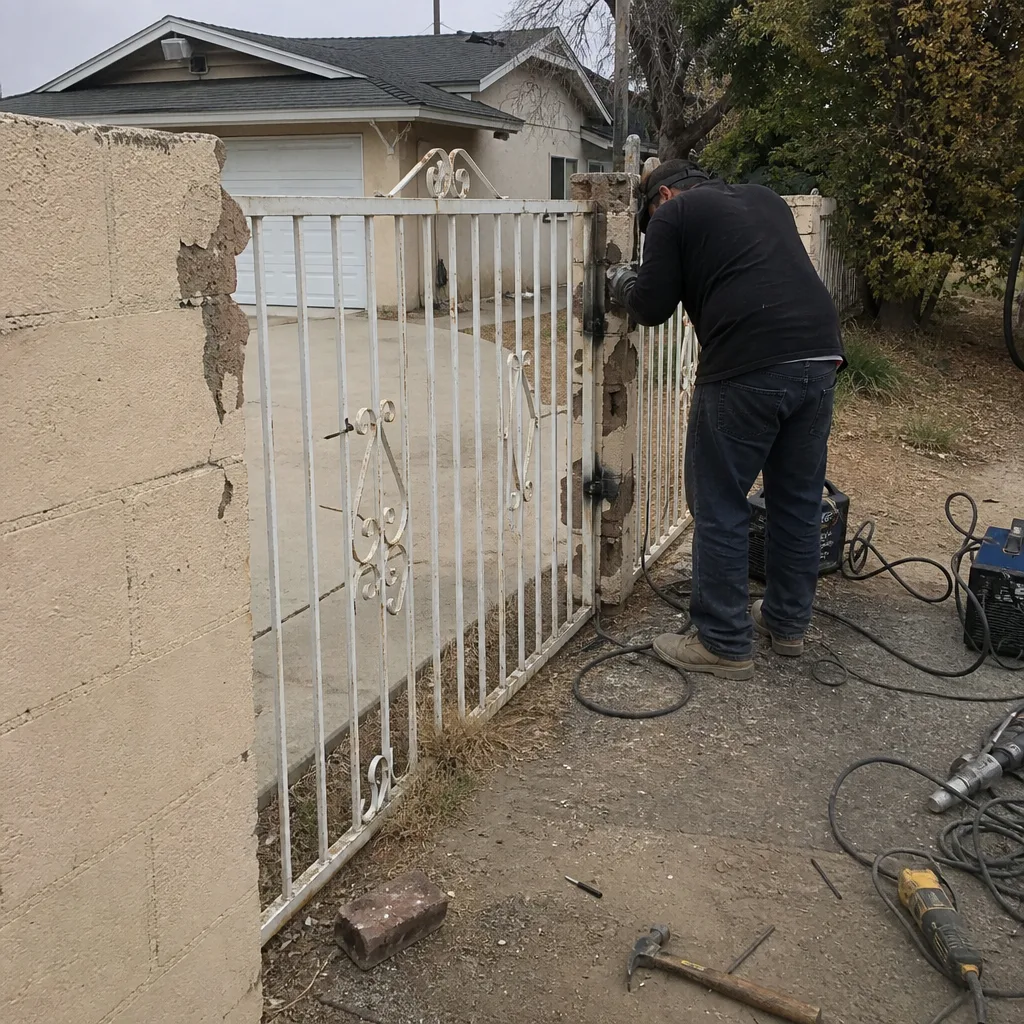 Before
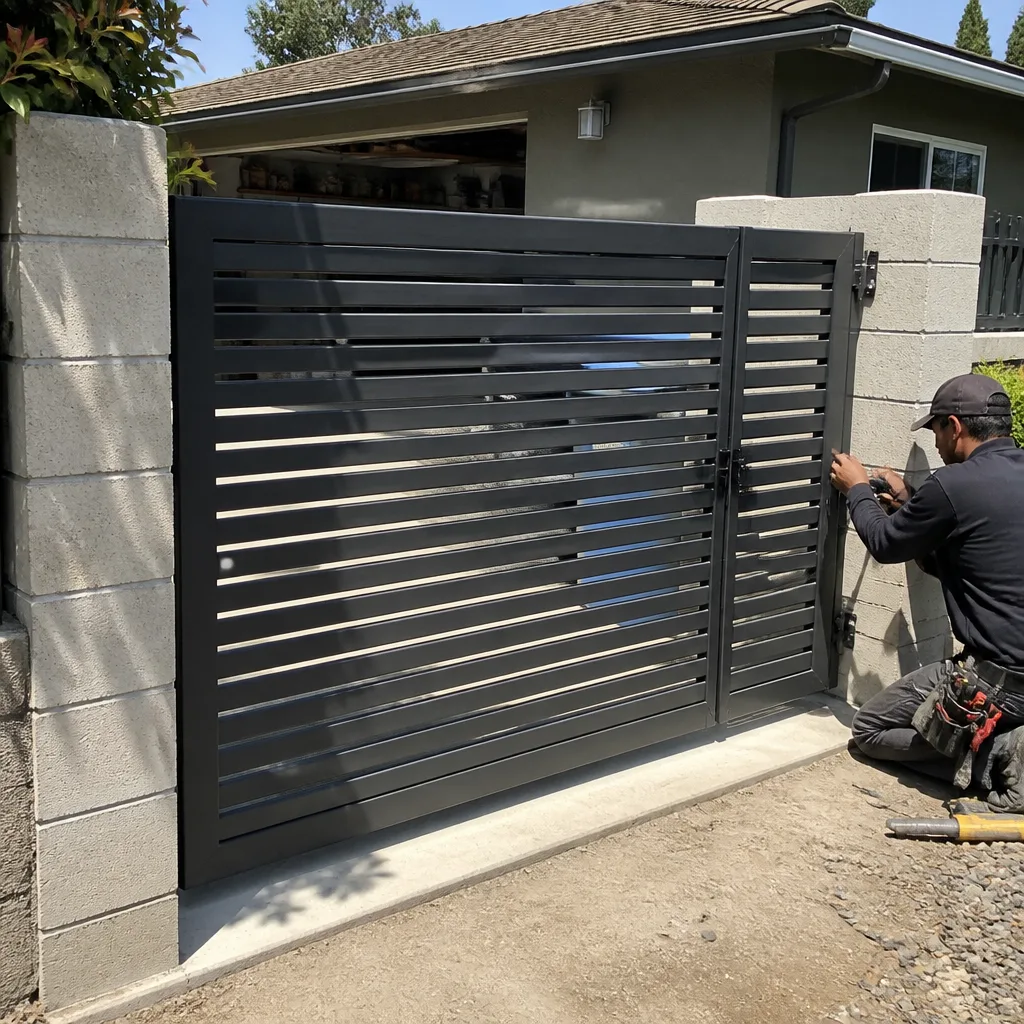 After
After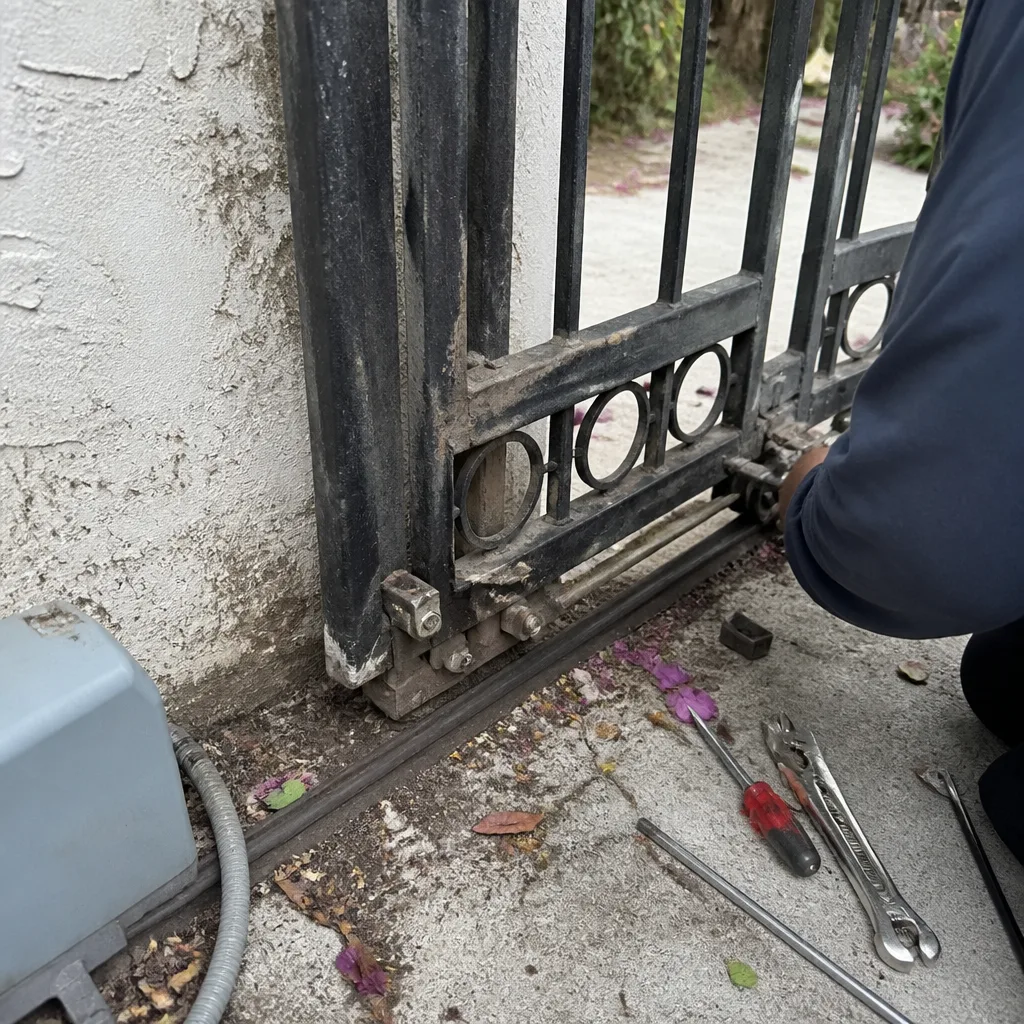 Before
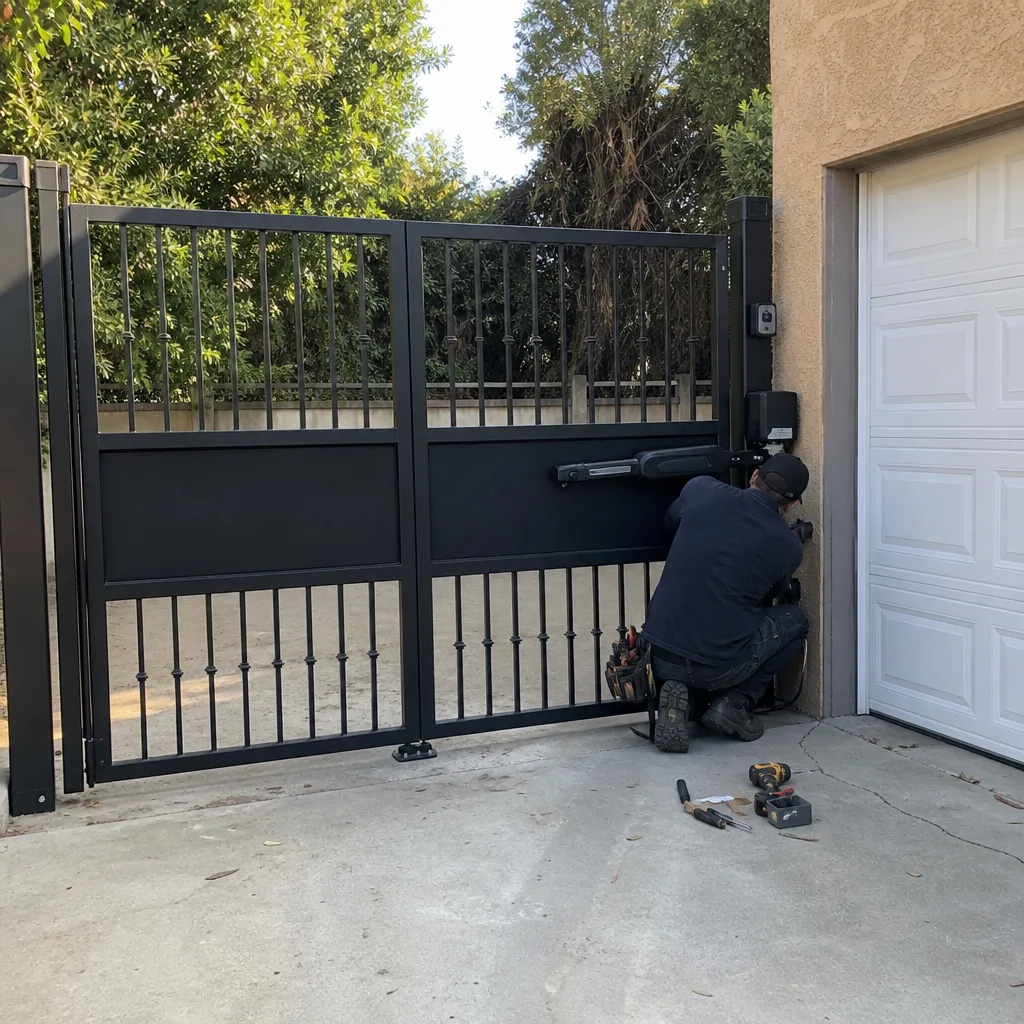 After
After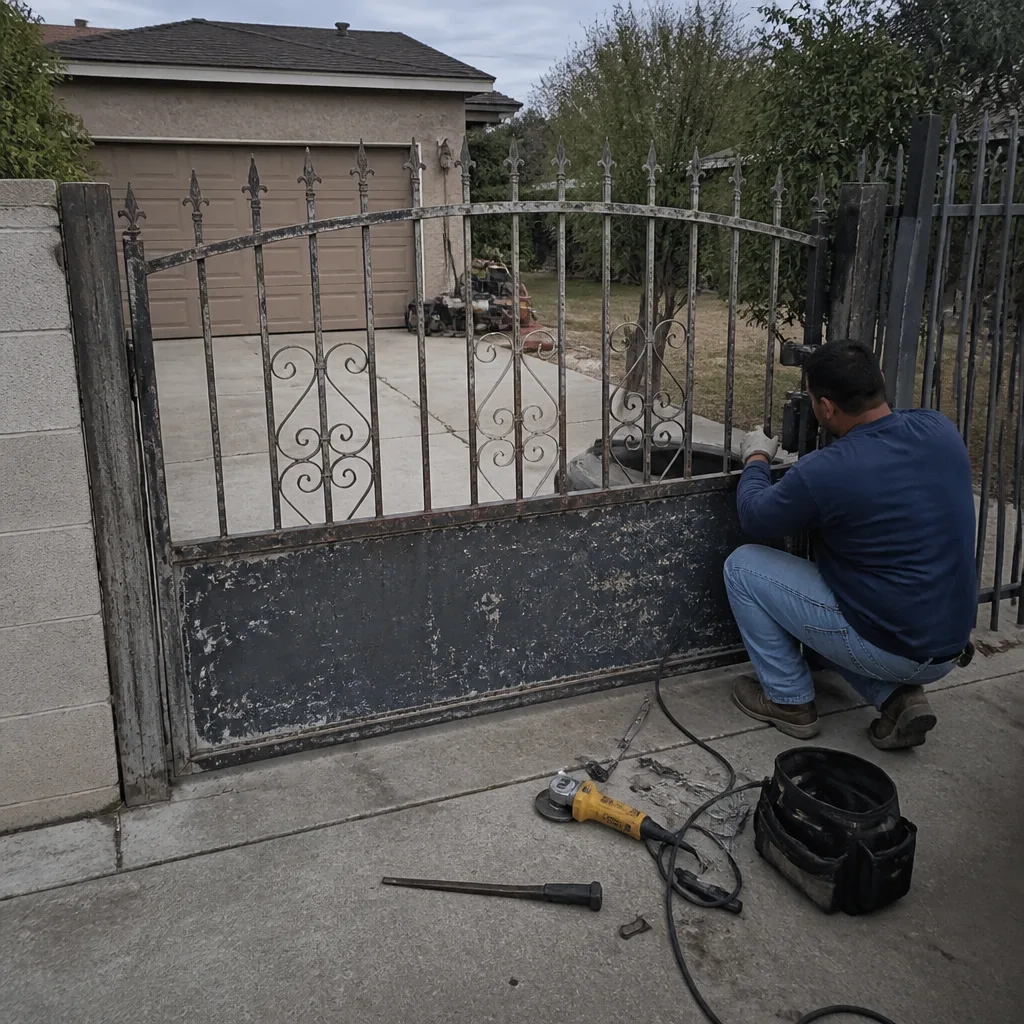 Before
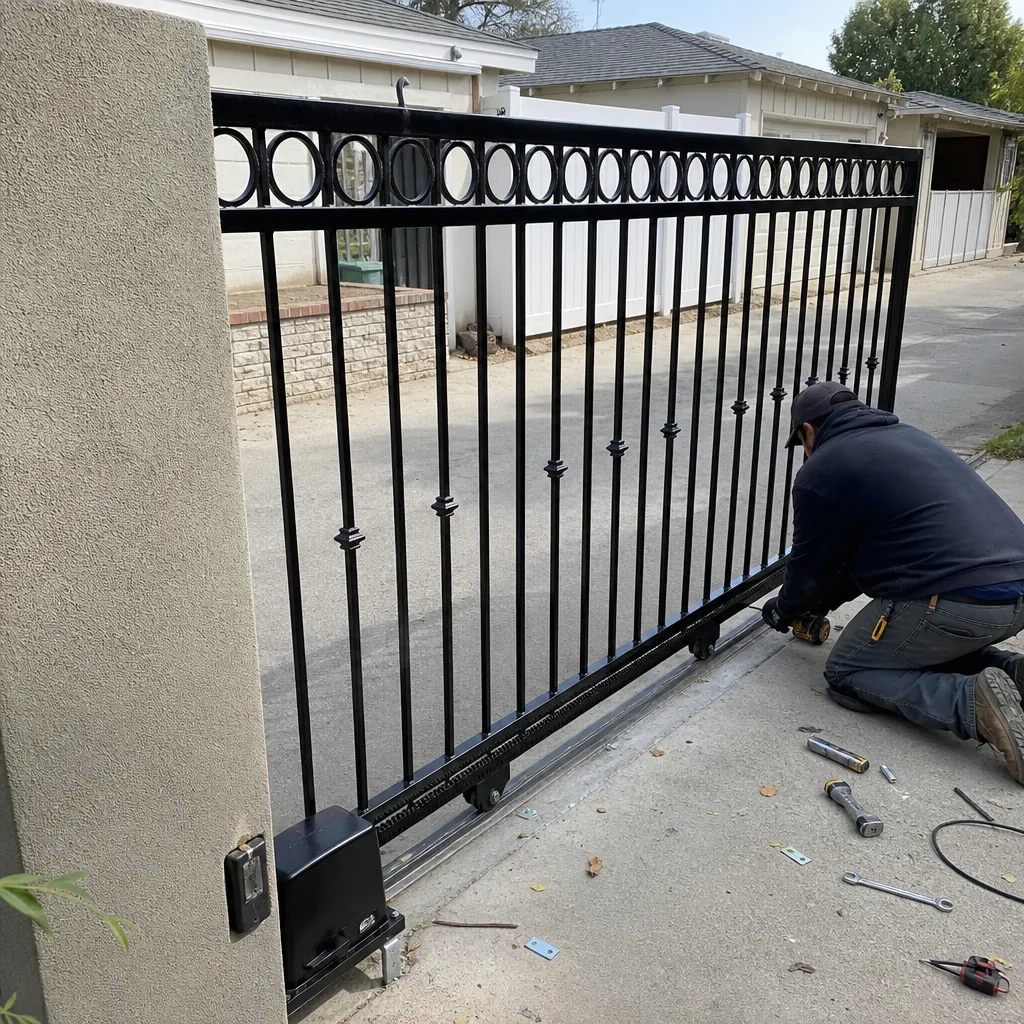 After
AfterSeasonal Gate Repair Care for Van Nuys: Year-Round Homeowner’s Guide
Van Nuys homeowners tend to think of gate maintenance as a one-time event, something you do when the gate stops opening. Hal Gatewood has watched that assumption fail for 24 years. The gate failures he sees most often spike in October, not because anything dramatic happened, but because five months of 95-degree days finally finished off the small problem the homeowner noticed back in May and decided to deal with “later.” This guide maps Van Nuys’s actual climate, not the four seasons you learned in school, to the care your gate needs in each window of the year. For deeper reading, see The Complete Guide to Gate Repair in Van Nuys.
Quick Answer
Seasonal gate care in Van Nuys means treating the year as four distinct threat windows: winter wet, spring dust and pollen, summer heat stress, and fall Santa Ana winds. Each window damages different components, from post footings in clay-heavy soil to opener electronics in sustained heat. A simple seasonal inspection, done on schedule, prevents most of the failures we see at Gatewood Fence & Gate’s gate repair service.
Table of Contents
- The Winter Wet Window: December Through February
- The Spring Dust and Pollen Window: March Through May
- The Summer Heat Stress Window: June Through August
- The Santa Ana Wind Window: September Through November
- Preparing Your Gate Operator for a Van Nuys Summer
- How Santa Ana Winds Damage Swing Gate Geometry
- The Seasonal Log: Why Your March Work Should Still Matter in November
- Common Mistakes to Avoid
- When to Call a Professional
- Frequently Asked Questions
- The Bottom Line
The Winter Wet Window: December Through February
Van Nuys gets most of its annual rainfall between December and February, and while the total is modest by national standards, the timing and the soil are what matter. Much of Van Nuys sits on clay-heavy soil that expands when saturated and contracts when it dries. That expansion and contraction cycle is the quiet enemy of gate post footings.
A gate post set in a standard concrete footing will tolerate some soil movement. But in Van Nuys, where years of drought can be followed by a single January with multiple soaking storms, the soil shifts enough to move posts that were never backfilled correctly or that lacked adequate concrete depth. The early sign of a footing starting to move is not a sagging gate. It is a visible crack forming in the soil around the base of the post, often in a crescent shape. You may also see a small gap opening between the post and the concrete collar, or water pooling around the base longer than it pools elsewhere in the yard.
What to do in this window:
- After each significant rain, walk out and look at the ground around each gate post. Look for the crescent crack or a gap between post and concrete.
- Test the gate by hand. With the opener disengaged, swing or slide the gate slowly. Listen for a grinding sound where there was none in October. That changes the character of the noise from “dry hinge” to “post moving.”
- Check drainage. If water pools around a post, that spot is doing more expanding and contracting than the rest of the yard. A French drain or a regraded slope may be a better long-term fix than another bag of concrete.
- Inspect the bottom rail and the lowest hinge point for standing moisture. A gate that sits in a puddle after rain will rust faster at the bottom rail, and that rust is where gate panels fail first.
We repair more swing gates in February than in any other winter month, and the cause is almost always a footing that gave way in January. The Gate Repair in Van Nuys page covers what a full post reset involves, but the short version is this: a post that moves in winter does not reset itself in spring. The concrete does not re-grip. You either fix it, or you wait for the gate to sag enough to drag.
The Spring Dust and Pollen Window: March Through May
Spring in Van Nuys is not the gentle thaw other parts of the country get. It is a dry, dusty, pollen-heavy stretch where the air itself carries grit into every moving part of your gate. The Santa Monica Mountains shed pollen and fine dust that settles on hinge pins, roller tracks, and opener chains. Combined with a few spring rain showers, that dust becomes a paste. Combined with lubricant, it becomes an abrasive.
The worst thing a homeowner can do in March is spray lubricant onto a dirty hinge. You are essentially lapping the metal surfaces with a sanding compound. The second worst thing is to leave the gate dirty all spring and then wonder why the opener motor starts running hot in June.
Spring maintenance in Van Nuys, done right:
- Wipe hinge pins and roller tracks clean before adding any lubricant. A rag is the right tool. Then apply a dry-film lubricant or a light machine oil, not a heavy grease that will capture more dust.
- Check the gate wheels or rollers for flat spots. When dust builds up between the wheel and the track, the wheel can stop rolling and start skidding. A flat spot is permanent.
- Clean the opener’s external safety sensors. A surprising number of “my gate won’t close” calls in April are just a pollen film over the photo eye.
- Inspect the chain or belt tension on the opener. Metal chains expand in heat, and a chain that is borderline in April will be slack by July.
Spring is also the right time to inspect the gate’s paint or powder coat. Van Nuys’s dry heat will crack paint faster than rain will. If you see hairline cracks in the coating, especially along the top rail where sun hits hardest, touch them up before summer. Bare steel in Van Nuys rusts even without rain; the morning marine layer provides enough moisture.
The Summer Heat Stress Window: June Through August
Van Nuys summers are unrelenting. Consecutive days above 95 degrees are normal, and temperatures above 100 are not rare. What that heat does to a gate depends on what the gate is made of and where the opener sits.
Steel gates expand in heat. A swing gate with tight clearance in the closed position may rub against the stop or the latch post when the panel grows by a fraction of an inch. A slide gate on a steel track will expand lengthwise, and if the track was installed without an expansion gap, the gate will bind. We have seen slide gates refuse to close at 2 p.m. and work fine at 9 p.m., and the homeowner thinks the opener is failing. The opener is not failing. The gate is growing.
What to watch in summer:
- Test the gate at the hottest part of the day, not in the morning. A gate that runs smoothly at 8 a.m. and sticks at 3 p.m. is telling you something about clearances.
- Check for a hot-running motor. Place a hand on the opener housing after the gate cycles. If it is too hot to hold comfortably, the motor is working against a bind, not just running normally.
- Listen for a change in motor pitch. A motor that strains to move the gate on a 100-degree day is under more load than it was designed for. That strain shortens motor life.
- Inspect the keypad and any solar panels. Van Nuys’s direct sun is hard on plastic keypads; they fade and crack. If your keypad is in direct afternoon sun, relocating it to a shaded wall or adding a small cover can add years.
For more on what to look for in a gate opener that is struggling, see the Gate Motor & Opener in Van Nuys page. The short version is that most opener failures we see in August were developing symptoms in June.
The Santa Ana Wind Window: September Through November
Santa Ana winds are Van Nuys’s most predictable seasonal event and the most damaging to gate hardware. Northeast winds funnel through the passes and slam into the flatlands with gusts that can exceed 50 mph. In Van Nuys, those winds arrive just as the dry brush season peaks, which is what everyone prepares for. What few people prepare for is what those winds do to a swing gate.
A solid-panel swing gate acts like a sail. A 50 mph gust against a 12-foot driveway gate exerts enormous lateral force, not just on the panel but on the hinges, the hinge post, and the opener arm. The post takes that load first. If the footing is undersized or the post was set with marginal concrete, the post leans. Once a post leans, the gate’s entire geometry shifts. The latch no longer lines up. The opener strains. The gate starts to drag on the low side. And because Santa Anas arrive in bursts, the damage accumulates over a season, not in one dramatic event.
What to check before and during Santa Ana season:
- With the gate in the closed position, stand back and sight along the top rail. A lean of even half a degree is visible. Check both the hinge post and the latch post.
- With the gate open, grab the free end and try to rock it side to side. Movement at the hinge post is the early warning sign. Movement at the panel is normal to a point; movement at the post is not.
- Check the opener arm attachment points for slop. The wind loads the arm repeatedly, and a mounting bolt that was tight last year may have wallowed out its hole.
- Inspect the latch. In Santa Ana season, a latch that is marginal will pop open under wind load. If you can jiggle the latch open with moderate hand pressure, fix it before the November gusts test it.
We tell Van Nuys homeowners the same thing every fall: the wind does not break gates. It reveals gates that were already failing. If your gate survives a Santa Ana season without a geometry change, it is probably sound. If it does not, the post root is the place to look. Fix the panel without the post and you will fix it twice.
Preparing Your Gate Operator for a Van Nuys Summer
Automatic gate openers in Van Nuys run in hotter conditions than most manufacturers test for. The electronics, the motor, and the battery all degrade faster in sustained heat, and the failure usually comes when the opener is needed most: during a heat wave, when the owner is least willing to stand in the sun and diagnose it.
One of the most overlooked components is the battery backup. Most Van Nuys homeowners do not know their opener has one until the power goes out and the gate will not open. Battery backup systems for operators like Ghost Controls, DoorKing, and Elite are designed to run in a defined temperature band. Above about 110 degrees, which the inside of a metal control box can easily reach on a 100-degree Van Nuys day, the battery degrades faster. A battery that is three years old and has been baking in direct sun every summer is a dead battery waiting for a power outage.
Here is a real-world example. Homeowner in the Lake Balboa section of Van Nuys has a DoorKing operator with a battery backup installed in 2019. The control box faces western sun. Every summer, the box gets direct afternoon heat. In July 2023, a heat wave knocked out power to the block for six hours. The homeowner pressed the remote, and nothing happened. The battery was at zero, not because it was defective, but because it had been cooked for four summers. He did not know until he needed it.
Steps to prep your operator for summer:
- Locate the control box. If it faces west or sits in direct sun, consider a shade panel or a relocation of the box. This is the single highest-impact change you can make.
- Test the battery backup. In June, shut off the breaker to the opener and try to run the gate. If it works, good. If it does not, you now know in June instead of during an August outage.
- Check the opener’s force settings. In heat, gates expand and bind slightly. Some homeowners or poorly trained installers will crank up the opener force setting to compensate. That masks the problem and wears out the motor. A properly adjusted opener should move the gate without laboring, even in heat.
- Inspect the wiring. Van Nuys heat dries out insulation. Cracks in wire insulation near the control box or along the track are a fire hazard and a signal failure waiting to happen.
- Close the gate. Stand at the hinge post and sight down the gap between the gate and the post. The gap should be even from top to bottom. A wider gap at the top means the post is leaning away from the gate.
- Open the gate to its full extension. Look at the bottom of the hinge post where it meets the concrete or soil. If you see a crack, a gap, or a widening of the previous season’s crack, the post is moving.
- With the gate open, place a level on the hinge post. Check both planes: front-to-back and side-to-side. A post that is out of level in either plane by more than a fraction of a degree is a repair waiting to happen.
- If you find lean, do not attempt to straighten the post by pulling on the gate. That bends the hinges and makes the repair worse. A post reset involves removing the gate, excavating around the footing, resetting the post, and pouring a proper footing. It is not a DIY job for a weekend, and it is not something to put off.
- The date of each seasonal check and what you found. Even “checked, nothing wrong” is useful. It tells you when the problem first appeared.
- Any sound change. A gate that used to be silent and now makes a soft clunk at the same point in its travel is telling you where to look. Write down where in the travel the sound happens.
- Any change in speed. A gate that opens slower in July than it did in April is telling you about heat expansion or opener wear. Note it.
- The last time you lubricated hinges and checked chain tension. Lubrication intervals are easy to forget.
- Any weather event that stands out: a heavy rain week in January, a five-day heat wave in August, a 60 mph wind event in October.
- Lubricating dirty hinges. In Van Nuys, spring dust and pollen turn lubricant into an abrasive paste. Clean first, then lubricate. It is the difference between caring for a hinge and grinding it down.
- Ignoring a crescent crack at the post base. That crack is the first visible sign of a moving footing in clay soil. By the time the gate actually sags, the repair is two or three times more expensive.
- Setting the opener force too high to “fix” a binding gate. A gate that binds in summer is a clearance or post problem. Cranking up the force masks it and destroys the motor. Van Nuys heat does not forgive a strained motor.
- Forgetting to test the battery backup. Most Van Nuys homeowners discover their battery backup is dead during a power outage. A June test takes two minutes and saves a hot afternoon in August.
- Touching up paint in the wrong season. Paint applied to a gate in January in Van Nuys will get rained on before it fully cures. Paint applied in direct summer sun will crack. The edges of the seasons are the right time for coating work.
- Pulling on a leaning gate to straighten the post. You cannot pull a post back into alignment by yanking on the panel. You bend the hinges, you gouge the track, and you make the reset job harder. Stop and call someone who does this for a living.
- Ignoring a loud latch. In Santa Ana season, a latch that needs a hard pull to close is a latch that will pop open in a 50 mph gust. The lock is what keeps the gate closed when you are not watching.
How Santa Ana Winds Damage Swing Gate Geometry
Swing gate geometry sounds like an engineering topic, but it is the single most practical concept a Van Nuys homeowner can understand. A swing gate hangs from its hinge post. The entire weight of the panel, every day, every year, pulls down and slightly outward on that post. A properly installed post in a deep concrete footing resists that load indefinitely. A post in a shallow footing, or one set in clay that heaves in winter, will begin to lean.
A gate sags in the hinge post, not in the middle. That is the sentence Hal Gatewood uses most often when explaining gate repair to Van Nuys homeowners, as covered in our DIY vs Professional Gate Repair: The Van Nuys Homeowner’s Decision Guide. The panel itself rarely changes shape. The post moves. And when the post moves, everything attached to it moves: the gate panel, the latch alignment, the opener arm travel, the closing pressure all change at once.
Santa Ana winds accelerate this. A sustained wind load on the face of the gate pushes against the panel and, through the hinges, against the post. If the post was even slightly loose from winter soil movement, the wind finishes the job. By mid-October, the gate that was slightly stiff in September is now dragging on the ground, the opener is tripping its safety reverse, and the latch will not stay closed.
Checking for post lean in Van Nuys, step by step:
Show me the gate closing on its own and I will show you where it is failing. That is the rule of thumb we use on every Gate Installation in Van Nuys job, and it applies just as much to an existing gate as to a new one. If your gate has started closing itself, or if it needs help to fully close, the number one suspect is post movement.
The Seasonal Log: Why Your March Work Should Still Matter in November
Most homeowners do not keep a log of their gate. They rely on memory, and memory is unreliable across eight months and two hundred degree temperature swings. You will not remember in November that the hinge pin felt slightly loose in March. But that slight looseness is exactly what the Santa Anas will exploit.
A seasonal log does not need to be complex. A single sheet of paper, taped inside the control box or saved in a phone note, is enough. The point is not to document everything. The point is to record the small observations that become warnings in hindsight.
What to record:
Here is a sample template:
Date: ____________
Season: Winter Wet / Spring Dust / Summer Heat / Santa Ana
Hinge condition: ______________
Post check (cracks, gaps, lean): ______________
Opener sound/speed: ______________
Battery test passed? Y / N
Lubricated? Y / N
Notes: ______________
That template, filled out four times a year, is more valuable than any gate maintenance guide, including our more guides & resources. It is the single largest piece of information a repair tech can have when diagnosing a problem in October: the history of the gate, in the homeowner’s own notes, across the full year.
Common Mistakes to Avoid
When to Call a Professional
Some gate work is genuinely dangerous to do yourself. If your gate uses high-tension springs, the kind on a large slide gate or a heavy commercial panel, do not touch them. The stored energy in those springs can kill. If your gate has a high-tension cable or a torsion spring, call someone who works with them regularly. The same applies to any electrical work behind the control board. Tripping a breaker is safe. Poking at wiring with the panel open is not.
Call a professional when the post is leaning, when the gate has started to bind in heat, when the opener is hot to the touch after a normal cycle, or when you see a crescent crack at the post base and do not know what it means. Gatewood Fence & Gate offers free estimates in Van Nuys. Call (951) 749-5734 and a live person answers. That is not a slogan. It is how Hal runs the shop.
Frequently Asked Questions
Four times a year, once per season, is the right cadence. Ten minutes per inspection, plus a note in your log, catches most problems before they become failures. In Van Nuys, the specific weeks that matter are late February for winter wet, late May for spring dust, mid-August for summer heat, and mid-October for Santa Ana wind season.
Basic seasonal maintenance, meaning a cleaning, lubrication, tightening, and inspection, typically runs $125 to $250 for a standard residential swing or slide gate in Van Nuys. If the inspection turns up a post problem or an opener issue, the repair cost is separate and depends on what is found. We quote every price in writing before work starts. Call (951) 749-5734 for an exact quote, estimates are free.
Yes, for most common issues: a latch that will not close, an opener that stopped responding, a hinge that came loose, a gate that is dragging. We carry parts for major brands on the truck, and Hal does on-site welding. A full post reset or a custom panel rebuild takes longer, but we can usually start the same day you call.
Yes. We service Ghost Controls, DoorKing, Elite, and Mighty Mule among others. We do not require that we installed the opener. If it is on your gate in Van Nuys, we will diagnose it. We also handle the power run and wiring, which is where many opener problems actually live.
First, check if your opener has a battery backup. If it does and the gate will not run on battery, the battery may have degraded from heat exposure. In that case, there is usually a manual release lever on the opener that lets you push or slide the gate by hand. Once power is restored, call us to test the battery and replace it if needed. A battery that failed once will fail again.
That pattern is characteristic of heat expansion. In Van Nuys, a steel gate on a steel track will expand in direct afternoon sun and bind against the stops or the track edges. It is not your opener failing, and adjusting the opener force will make it worse. The fix is usually a clearance adjustment or a track realignment, and it is a quick job. Call (951) 749-5734 for a free estimate.
The Bottom Line
Van Nuys has four distinct seasons of gate damage, even if the calendar does not acknowledge them. Winter wet attacks post footings in clay soil. Spring dust and pollen grind through hinges and rollers. Summer heat expands steel and cooks opener electronics. Santa Ana winds reveal every weakness the other seasons left behind. The homeowner who inspects four times a year, keeps a simple log, and fixes small problems when they are small will spend a fraction of what the reactive homeowner spends, and the gate will still be working in October. If you are not sure what you are looking at, start with Gatewood Fence & Gate home and read through the services. Then call us. We will talk it through before anyone schedules a truck.
Written by Hal Gatewood, Owner at Gatewood Fence & Gate, serving Van Nuys since 2001.