
Last updated August 26, 2026
Free on-site gate assessment - hinges, posts, and your LiftMaster or Nice gate operator checked before anything is quoted
The assessment is free and the quote is the invoice.

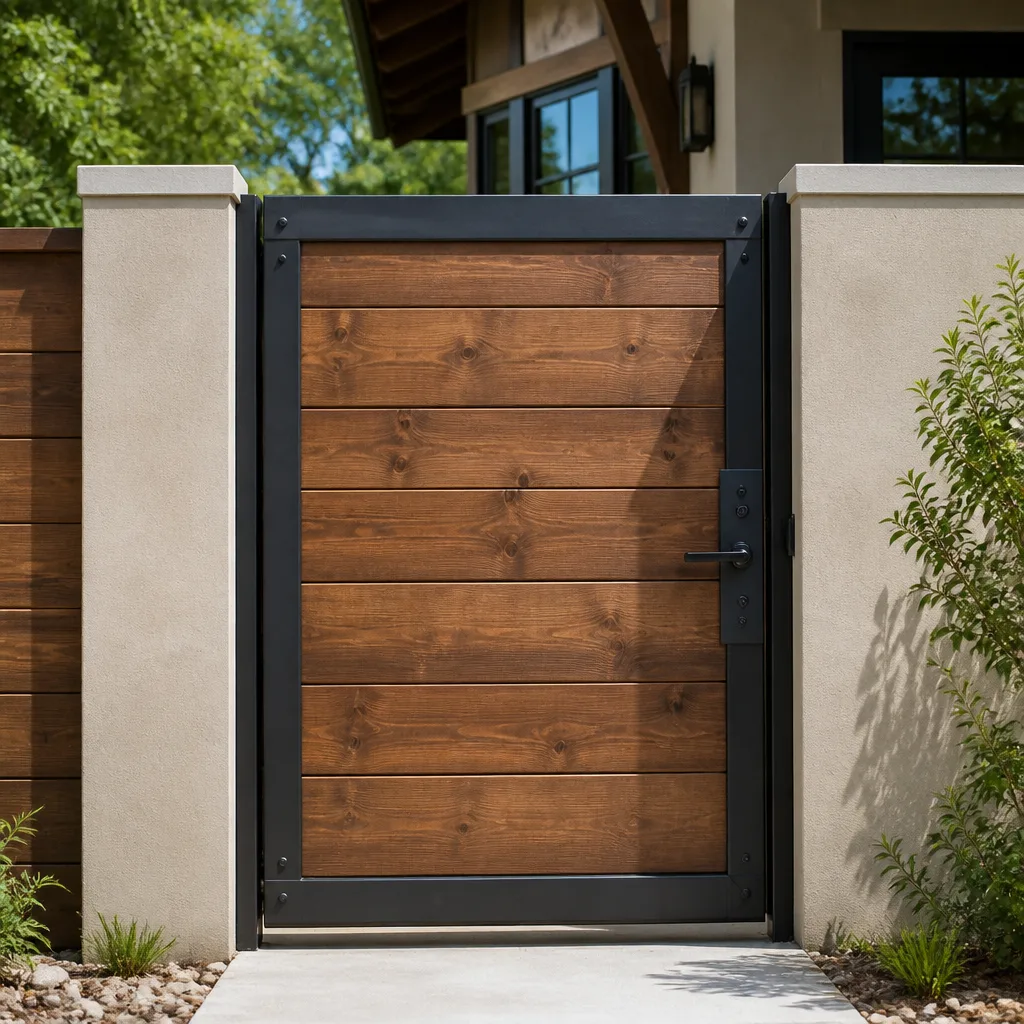
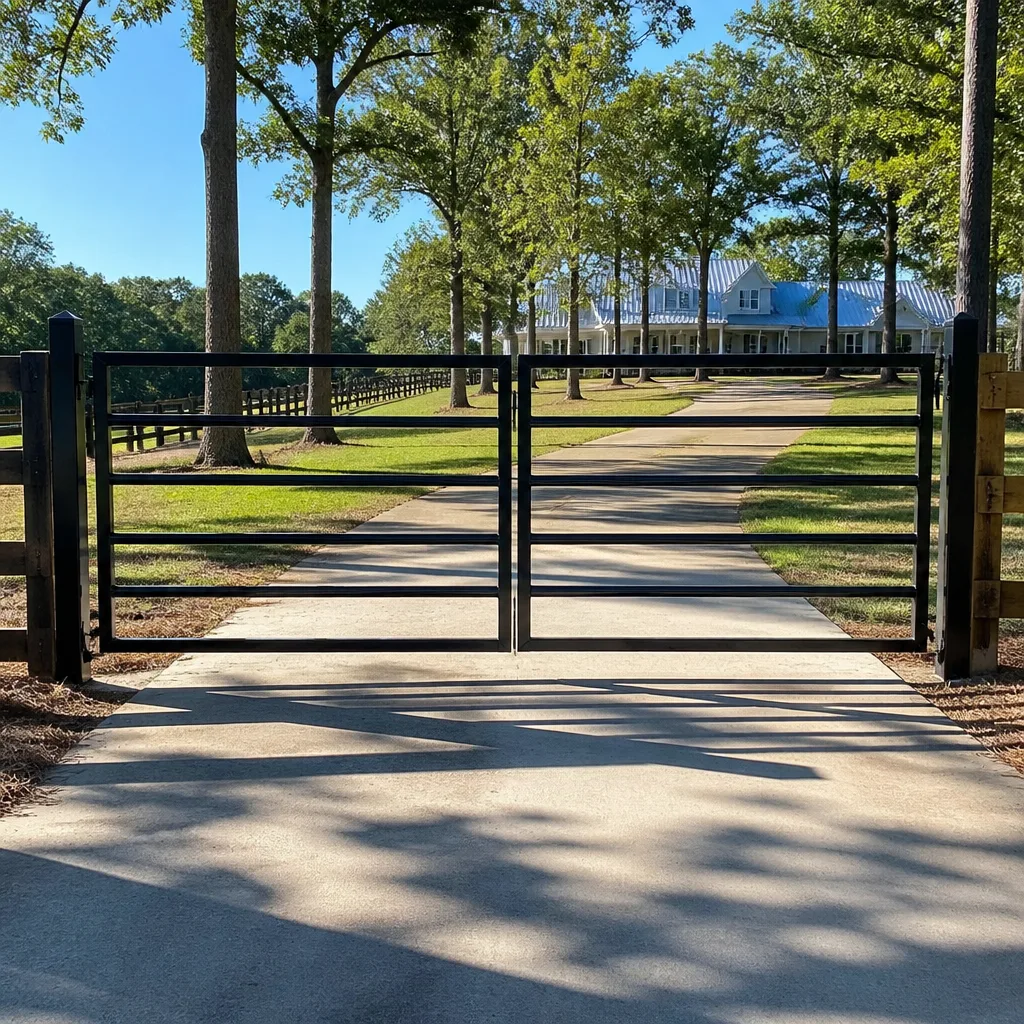
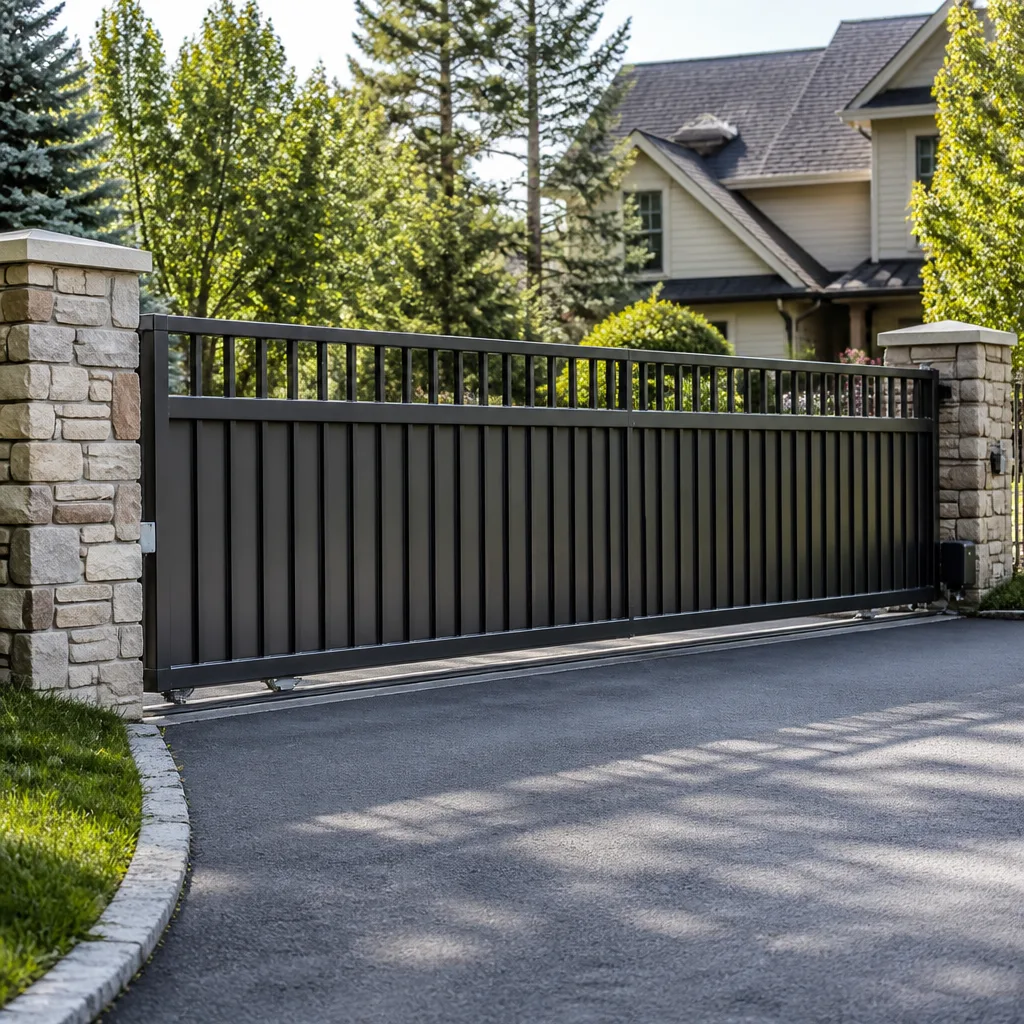
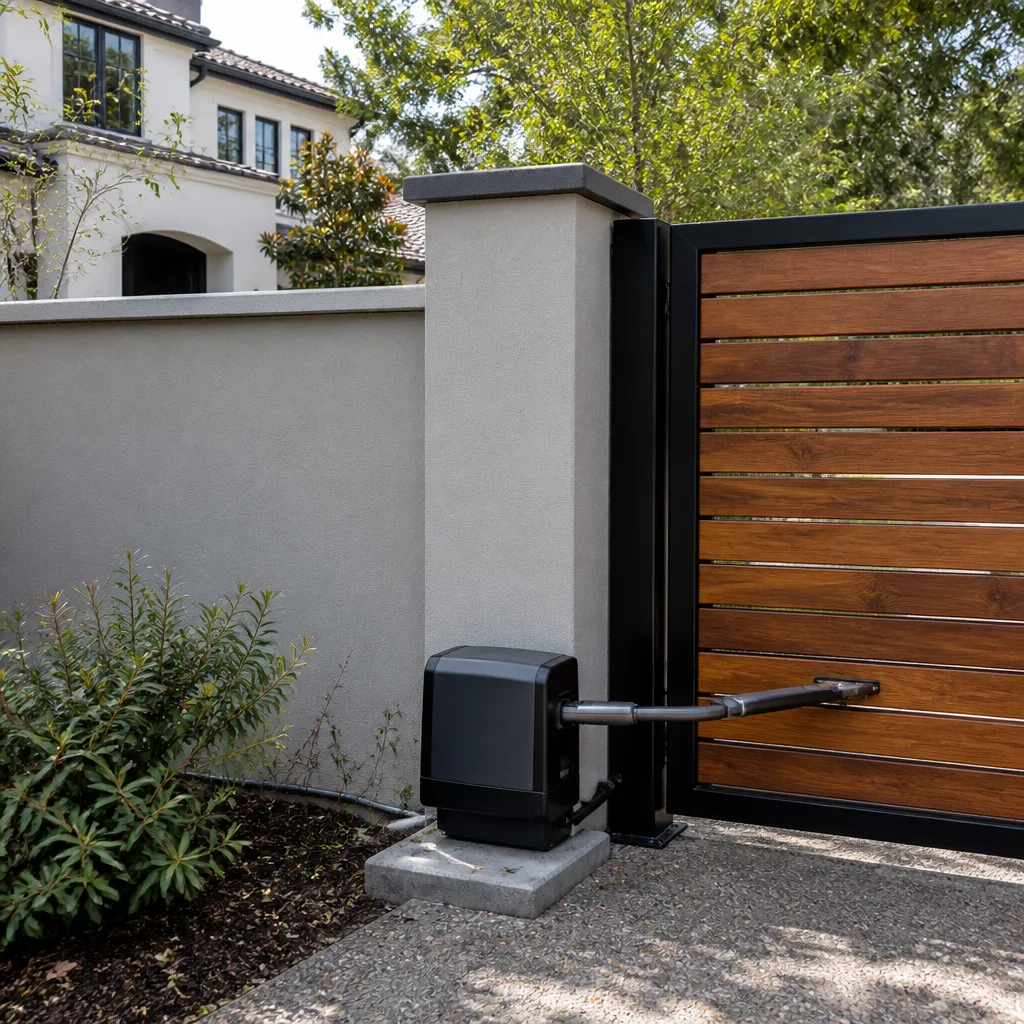
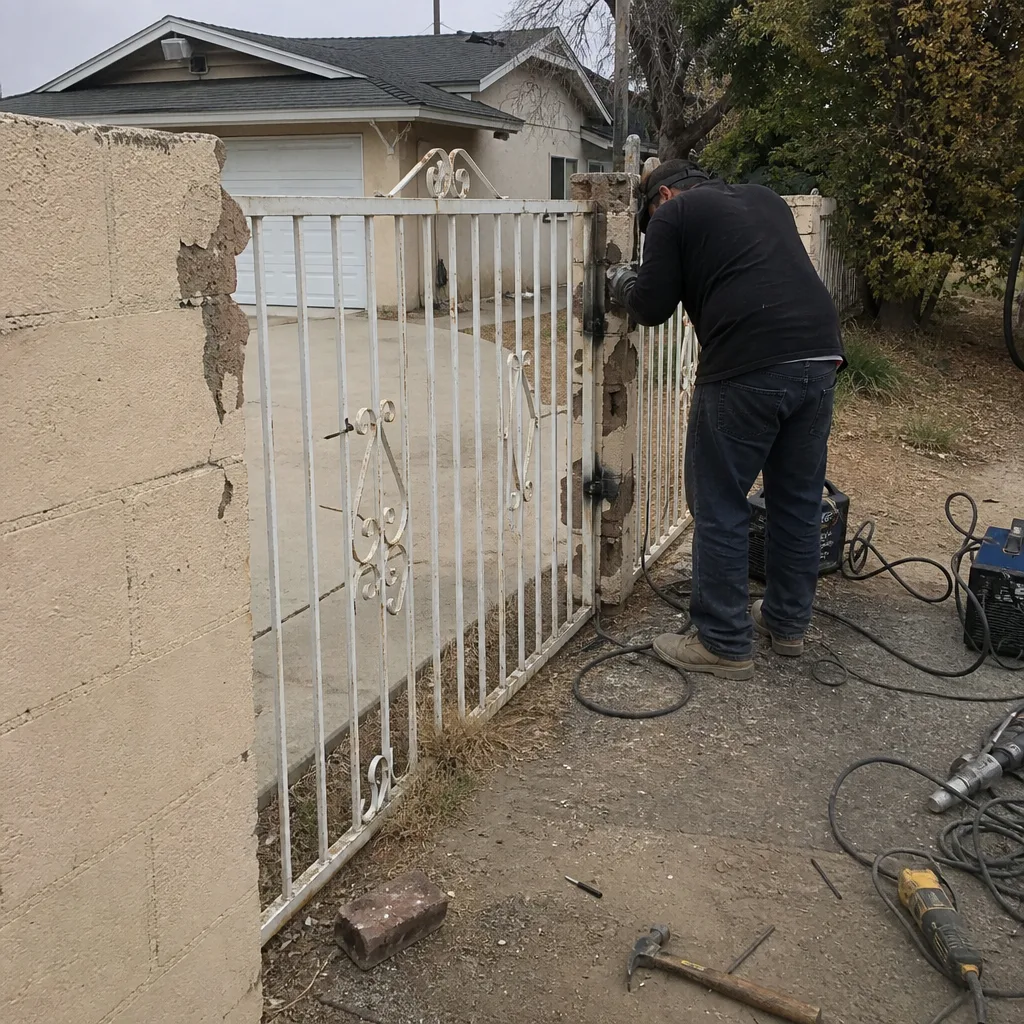 Before
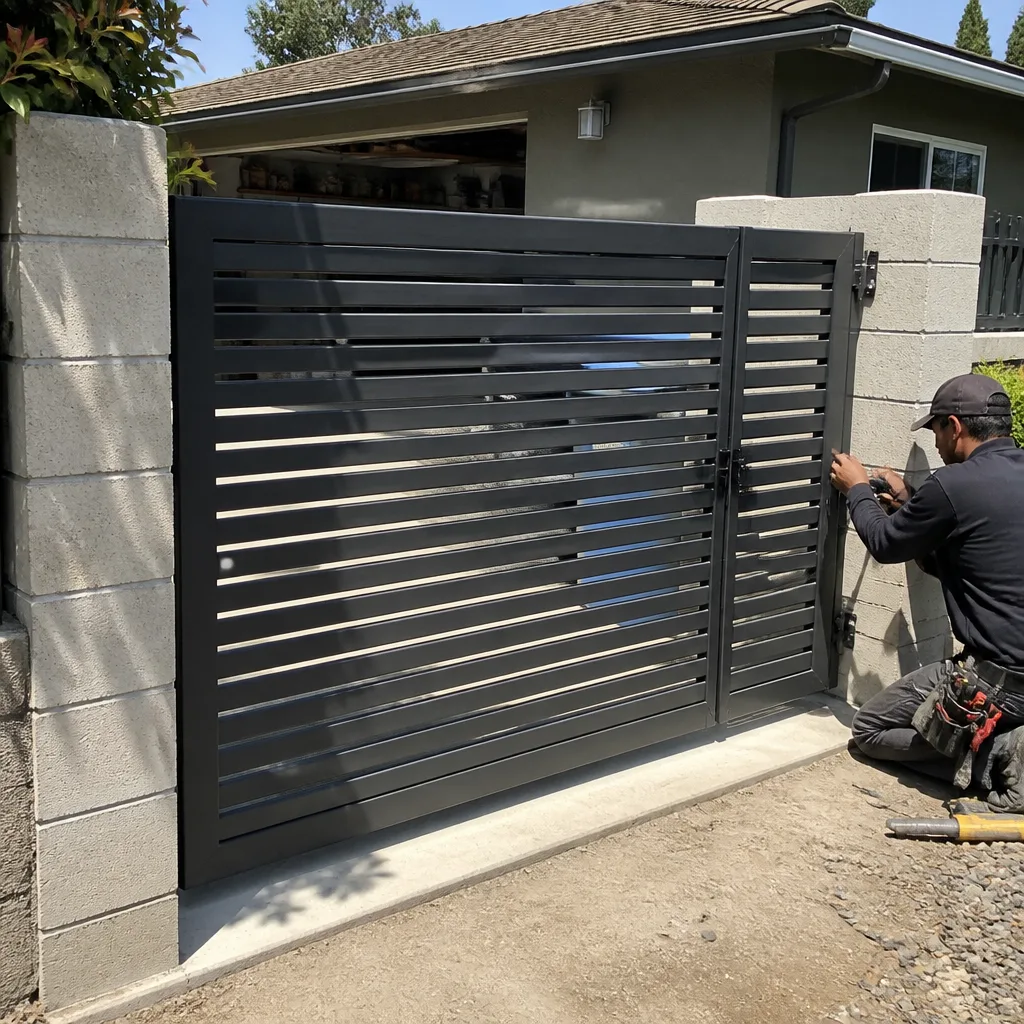 After
After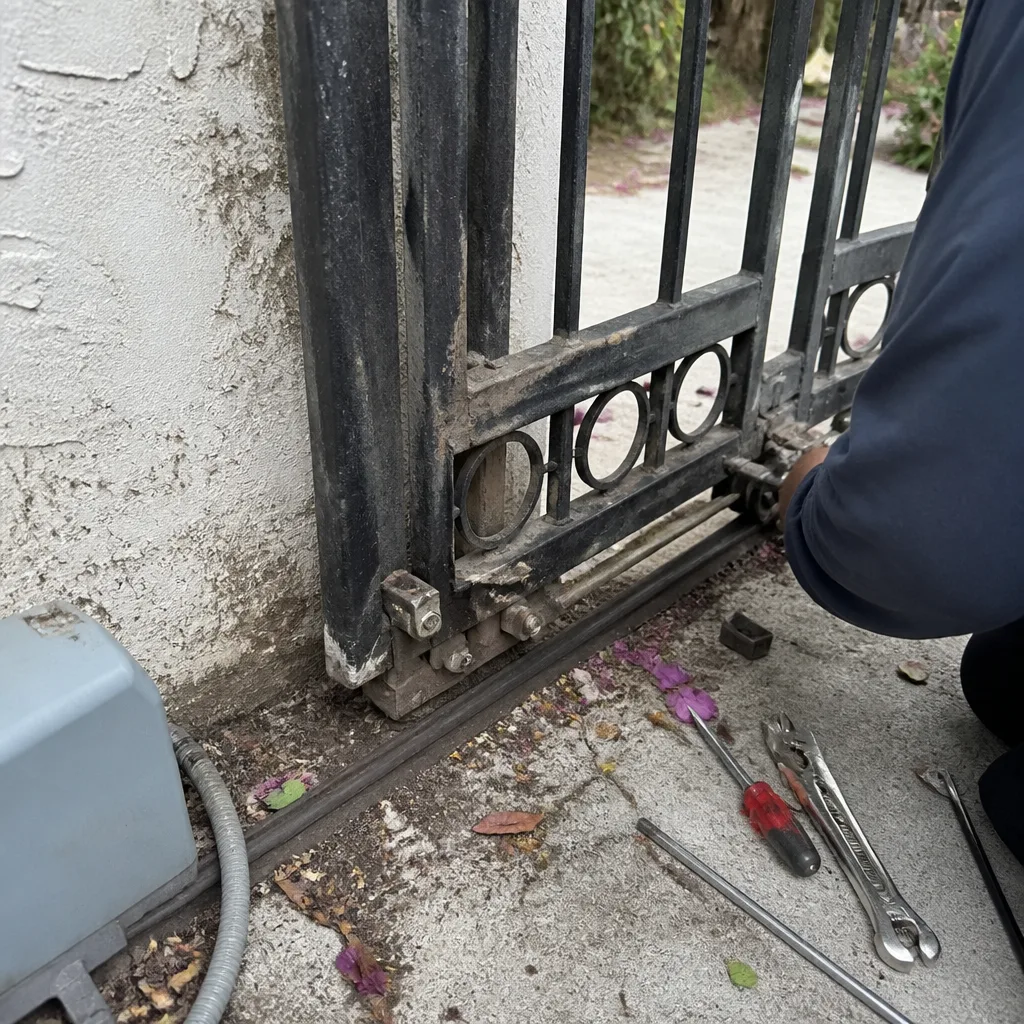 Before
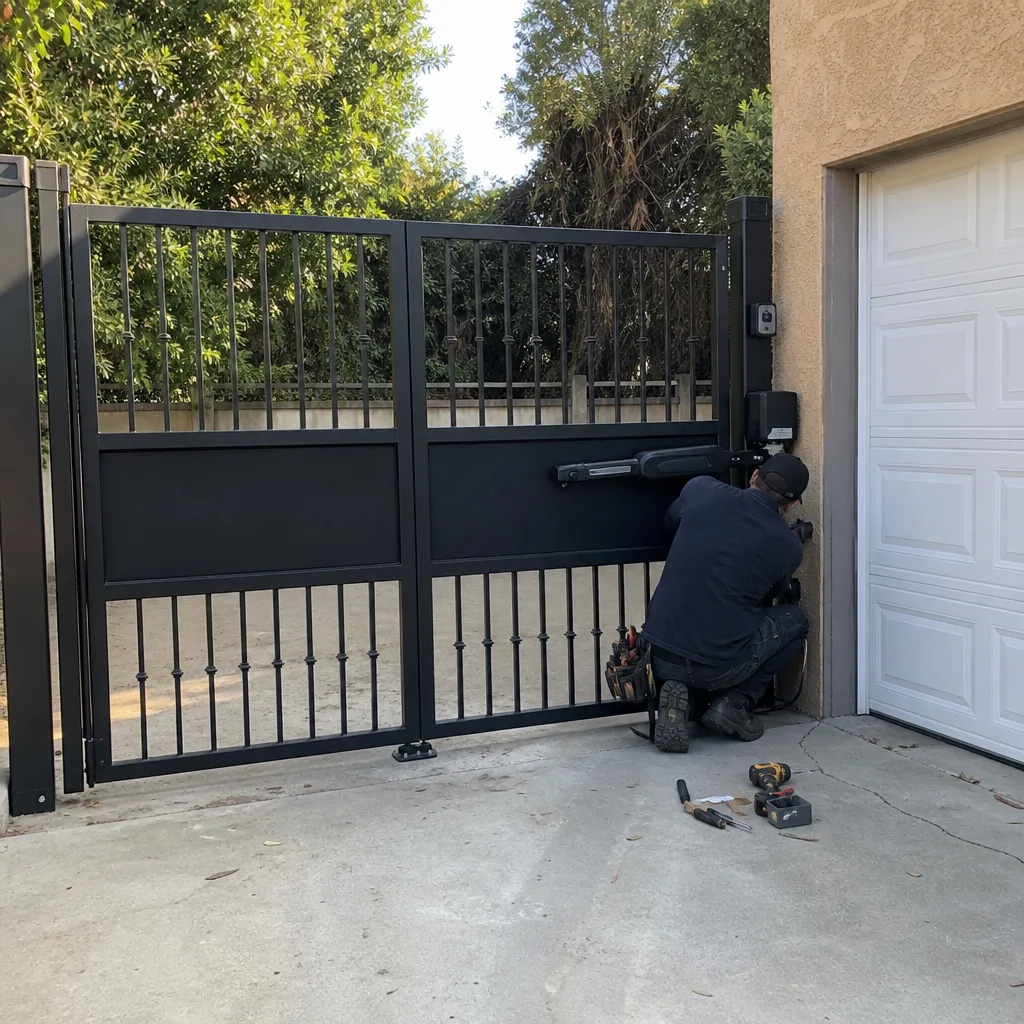 After
After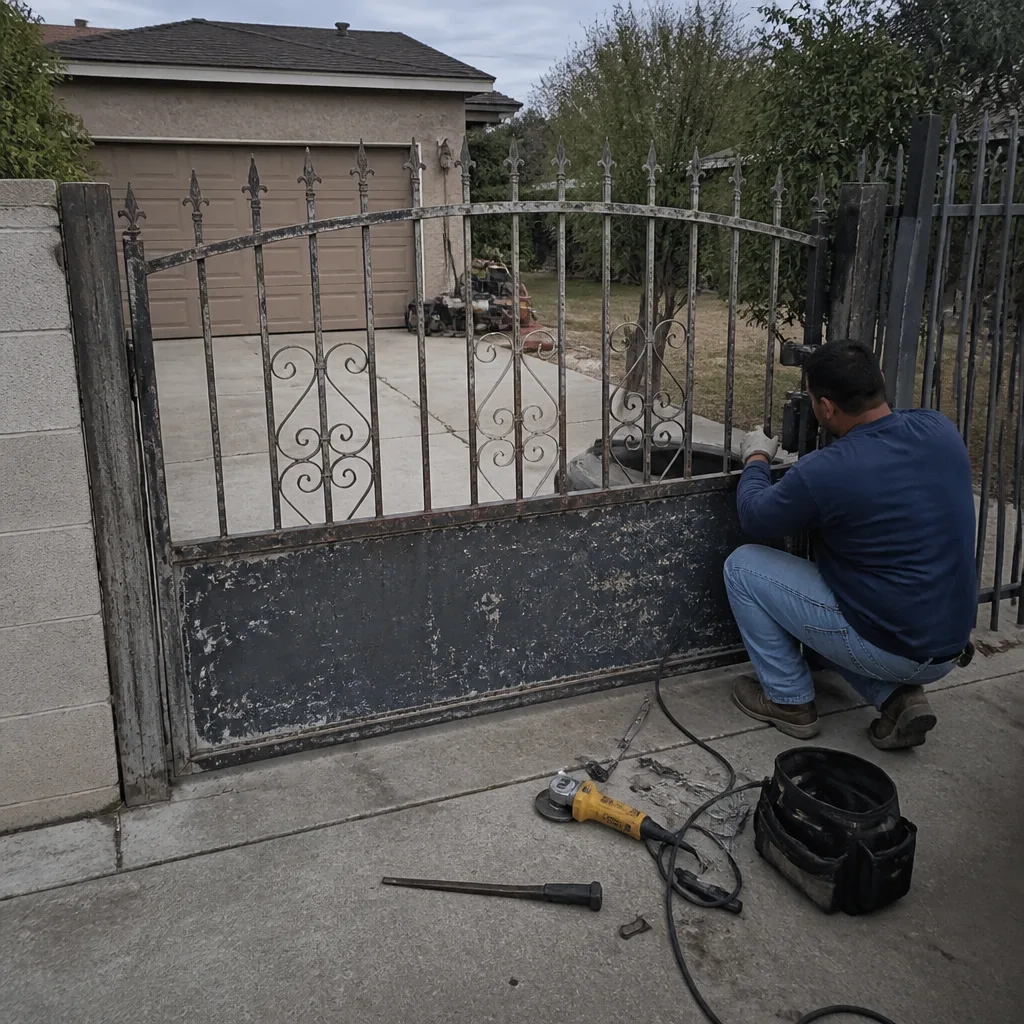 Before
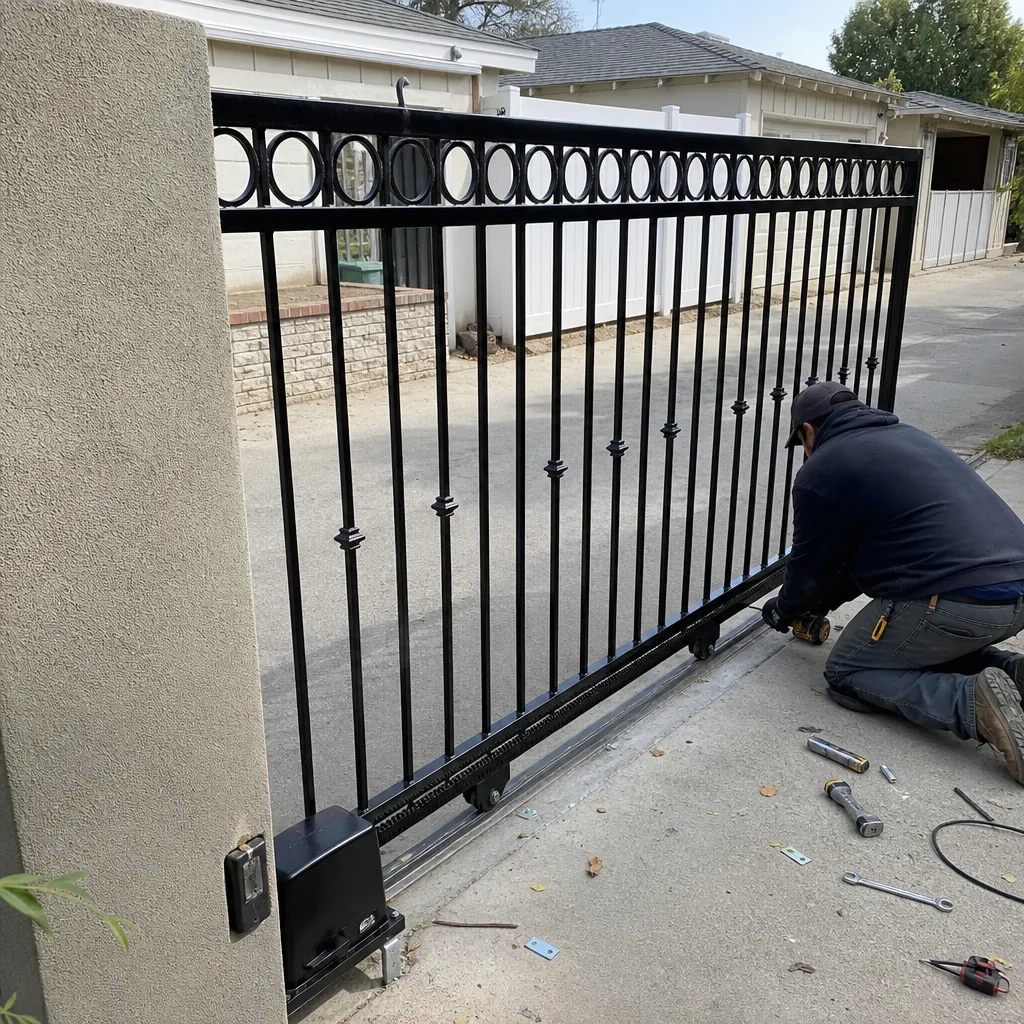 After
AfterGate Repair Permits, Codes & Inspections in CA: What You Need to Know
If a gate contractor tells you “don’t worry about permits, nobody pulls them for gate work” and then installs a new automatic operator on your property, that contractor just handed you a code violation you didn’t know you owned. Here’s the thing most homeowners in Van Nuys and across California never hear until it’s too late: the gate itself rarely needs a permit, but the motor that opens it often does. And when the motor is installed wrong, your insurance company has an easy reason to deny a claim if that gate ever hurts someone. This guide walks through what actually triggers a permit, what the inspector looks for, and how to protect yourself before the first hole is dug.
Quick Answer
In California, most residential swing gate and fence repairs do not require a building permit. What commonly does require a permit is installing or replacing an automatic gate operator, adding electrical service to a gate, modifying a gate that serves as a required exit, or working on any gate at a commercial property. The gate itself lives under the California Building Code, but the operator lives under UL 325 and the California Electrical Code, and that’s where permits and inspections actually bite.
Table of Contents
- What Actually Requires a Permit (and What Doesn’t)
- Why UL 325 Matters for Gate Operators
- Los Angeles County vs. City of Los Angeles: Know Your Jurisdiction
- What Happens at a Gate Permit Inspection
- Protecting Yourself When a Contractor Says Permits Aren’t Needed
- Common Mistakes to Avoid
- When to Call a Professional
- Frequently Asked Questions
What Actually Requires a Permit (and What Doesn’t)
Let’s get specific because the California Building Code draws a line that trips up a lot of homeowners. The fence posts, the pickets, the hinge hardware, the latch, the gate frame itself: none of that needs a permit for a typical residential repair or replacement, as long as you’re keeping the gate at the same height and in the same location. We weld gate frames back together, replace sagging hinge posts, and hang new panels on existing posts in Van Nuys weekly as part of our Gate Repair services, and none of that requires a trip to the building department.
What changes the picture is when the gate stops being a passive barrier and starts being a machine. Here’s the breakdown:
- Installing a new automatic gate operator: requires a building permit in most California jurisdictions because it involves new electrical work and a change to how the gate functions.
- Replacing an existing operator with a similar model: sometimes exempt, sometimes not, depending on the local jurisdiction. In Los Angeles, most like-for-like operator swaps still call for an electrical permit because the wiring, disconnects, and grounding are being touched.
- Running new electrical to a gate that never had power: always requires an electrical permit. No exceptions.
- Installing a gate across a driveway that serves as a required exit path: requires plan review in most cities. Fire and buildings departments both have a say.
- Any gate work on a commercial or multifamily property: permits are typically required, including crash-rated systems, access control, and pedestrian gates.
- Moving a gate, changing its swing direction, or changing its width: usually triggers review because it alters the safety zones and vehicle/pedestrian circulation.
For a single-family home in Van Nuys, the average fence-mounted swing gate repair almost never needs a permit. It’s the automation that flips the switch, and that’s where a contractor who wants the job done fast will quietly skip the paperwork. The Gatewood Fence & Gate home office has pulled enough of these to know which side of the line each job sits on.
Why UL 325 Matters for Gate Operators
UL 325 is the safety standard that governs automatic gate operators in the United States, and in California it’s not optional. It dictates the entrapment protection requirements: photoelectric sensors, reversing edges, force settings, warning signage, and the control layout. A gate operator that doesn’t meet UL 325 isn’t just non-compliant; it’s a documented hazard. And once it’s documented, your homeowner’s insurance has every reason to walk away from the claim.
Here’s what a compliant automatic gate installation includes:
- Primary entrapment protection: a monitored photo eye or a reversing edge on the gate, wired so that any interruption reverses the gate immediately.
- Secondary entrapment protection: a second independent device, often the operator’s built-in obstruction sensing, calibrated to the right force for the gate’s weight.
- Warning signage: permanent signs mounted on both sides of the gate, indicating automatic operation, per the manufacturer’s instructions.
- A dedicated disconnect switch: a means to kill power to the operator within sight of the gate, so anyone working on it can lock it out.
- Proper grounding and bonding: the operator, the metal gate frame, and any conductive components tied into the grounding system.
What we see in the field, unfortunately, is the opposite. A homeowner in Van Nuys buys a Mighty Mule or Ghost Controls kit online, hires a handyman to bolt it on, and ends up with no photo eye, no disconnect, and no signage. The gate works, sure, right up until it pins a grandchild against a post. UL 325 exists because that scenario is real. If you’re having a LiftMaster or Elite operator installed, insist that the installer confirm UL 325 compliance in writing before the job starts. For a deeper look at operator work specifically, see our Gate Motor & Opener page.
Los Angeles County vs. City of Los Angeles: Know Your Jurisdiction
Here’s a question most Van Nuys homeowners never think to ask: who actually has code authority over my address? Van Nuys is a neighborhood inside the City of Los Angeles, which means you’re under the Los Angeles Department of Building and Safety (LADBS), not the county. The City of Los Angeles requires permits for automatic gate operators, new electrical circuits serving a gate, and any gate that alters a driveway’s intended use. The county, by contrast, handles unincorporated areas like parts of the San Fernando Valley’s edges, and their requirements don’t always line up with city requirements.
The practical difference shows up in things like this:
- Plan review for driveway gates: Los Angeles often wants a simple site plan showing the gate’s swing path and setbacks. Some county areas just want the electrical permit.
- Setback rules: a gate that swings out over a public sidewalk in Los Angeles may be flat-out denied unless it’s a sliding gate. County rules can be more forgiving, depending on the road classification.
- Inspector preferences: LADBS inspectors in the Valley routinely check for UL 325 signage and entrapment protection at the final inspection. County inspectors are equally serious about electrical grounding but may not flag a missing warning sign as quickly.
- Fire department review: the City of Los Angeles Fire Department sometimes reviews gates larger than a certain width or gates serving multiple dwelling units. County fire has its own approval path for rural properties.
If you live in Van Nuys, you’re dealing with LADBS and the Los Angeles Municipal Code, which references the California Electrical Code and California Building Code. Don’t let a contractor tell you “county rules” apply to your city address. We handle gate repair in Van Nuys on both sides of this line often enough to know the difference matters at permit time.
What Happens at a Gate Permit Inspection
If your gate project does require a permit, the inspection isn’t a mystery once you know what the inspector is looking for. In Los Angeles, the typical sequence is: submit the permit application, pay the fee, complete the work, then call for inspection. Some jobs also require a rough inspection before the trench is backfilled, which is why you want a contractor who actually schedules that step instead of burying the conduit and hoping for the best.
Here’s the step-by-step reality:
- Rough inspection (if required): the inspector verifies the conduit, wire gauge, and grounding before the trench is covered. This is where a buried mistake becomes a dug-up driveway.
- Final inspection: the inspector checks that the operator is installed per the manufacturer’s instructions, the photo eyes are present and functional, the reversing edge triggers properly, the signage is up, and the disconnect switch is accessible.
- Correction notice (if any): minor items get a correction notice and a reinspection visit. Major items fail the inspection and require a redo.
- Sign-off: once signed off, the permit is closed out, and the installation is legal. That paperwork matters for insurance and future resale.
We tell Van Nuys homeowners to prepare for the inspection by keeping the permit card accessible, the breaker clearly labeled, and the gate’s manual release within reach so the inspector can test it. The inspector doesn’t care how nice the gate looks. They care about entrapment protection, electrical safety, and the paper trail that proves the job was done right. After 29 years of watching these inspections, we’ve learned that a compliant install sails through in under twenty minutes, and a sloppy one gets flagged every time. For Gate Repair Warning Signs: A Van Nuys Homeowner’s Reference Guide, see our detailed breakdown.
Protecting Yourself When a Contractor Says Permits Aren’t Needed
When a gate contractor tells you permits aren’t necessary, and they’re installing or modifying an automatic operator, you’re not getting the easy route. You’re getting the liability route. The good news: you can protect yourself with a few sentences on paper before the job starts. And if the contractor won’t put it in writing, that’s your answer.
Here’s what to ask for, in writing, before any work begins:
- A written statement on the estimate or invoice: “Contractor confirms that no permit is required for the work described, and accepts responsibility for any code enforcement or insurance consequences resulting from unpermitted work.” If they balk, walk.
- The specific code section they’re relying on: if they claim an exemption, they should be able to name it. In California, the exemption usually lives in the local administrative code, not in their memory of “how we’ve always done it.”
- UL 325 compliance language: for operator installs, get a line stating that the installation meets UL 325 entrapment protection requirements and includes all required safety devices and signage.
- Proof of contractor’s license and insurance: you can verify a California license number online through the CSLB. A real contractor expects you to check.
- A willingness to handle the permit if one is later required: even if permits aren’t pulled initially, get written confirmation that the contractor will correct any unpermitted work at no charge if the building department flags it.
We put this in writing on our own jobs in Van Nuys because the 90-Day Done Right Promise doesn’t mean much if the work wasn’t legal to begin with. If a contractor won’t stand behind the permit question, they’re not standing behind anything. Our gate installation service includes permit coordination when the job calls for it, and we’re happy to show you the paperwork before we start.
Common Mistakes to Avoid
- Assuming a fence permit covers a gate operator: a fence permit and an electrical permit are different approvals. The fence repair gets a pass, the operator with its wiring and controls often doesn’t, and getting them confused leaves the gate legally unfinished.
- Installing a gate that swings out over the sidewalk: in Van Nuys, forward-swinging driveway gates over a public right-of-way can be prohibited entirely. Homeowners find out when a neighbor complains and the city posts a notice.
- Skipping the photo eye because it’s “ugly”: a non-compliant operator is an entrapment hazard, and removing a safety device to make the gate look cleaner is exactly the kind of modification that voids the manufacturer’s warranty and a future insurance claim.
- Buying a cheap operator online and hiring a general handyman: the kit may say “DIY friendly,” but the electrical work, grounding, and safety device mounting often don’t meet code, and the handyman’s quote doesn’t cover pulling a permit.
- Not checking which jurisdiction the address falls under: Van Nuys is City of Los Angeles territory. Parts of the Valley’s edges are county. The permit counter is different, the forms are different, and so are the enforcement priorities.
- Paying in full before the permit closes: if the contractor disappears before the final inspection, the open permit becomes your problem when you sell the house. Release the final payment after the inspection is signed off.
- Thinking a “crash-rated” gate is the same as a regular gate with a strong post: crash-rated systems on commercial properties have their own engineering requirements, testing standards, and inspection path. A residential gate repair company shouldn’t be guessing at those.
When to Call a Professional
Call a licensed gate professional when the project involves electricity, automation, or anything that touches a required exit path. That means a new operator, a replacement operator on a heavy sliding gate, a power run that crosses a driveway and driveway, or a gate on a commercial property where access control is involved. If you’re not sure whether your project needs a permit, call someone who can answer that question specifically, not vaguely, or read How to Hire a Gate Repair Contractor in Van Nuys: A Step-by-Step Guide. Gatewood Fence & Gate offers free estimates in Van Nuys, and we’ll tell you plainly whether your job needs a permit or not. Call (951) 749-5734 and ask for Hal. A live person answers.
Frequently Asked Questions
No. Repairing a sagging gate, replacing a hinge post, or welding a cracked gate frame on a residential property in Van Nuys does not require a building permit. The permit requirement enters when you automate the gate, run new electrical to it, or change its swing and function.
Yes, in most cases. A new automatic gate operator involves new electrical wiring and a change to the gate’s function, which the City of Los Angeles treats as work requiring an electrical permit and often a building permit. The inspection also verifies UL 325 safety device compliance. Call (951) 749-5734 and we’ll tell you exactly what applies to your specific project.
UL 325 is the safety standard for automatic gate operators, covering entrapment protection, sensor requirements, and warning signage. It is required nationally and enforced in California through the building and electrical codes, and a non-compliant install can create liability on an insurance claim.
Contractually, the contractor who did the work should be, but reality is messier. If the work is unpermitted and something goes wrong, your homeowner’s insurance may deny the claim, and the unpermitted work becomes a resale disclosure problem for you as the property owner. That’s why we put permit responsibility in writing before jobs start.
A final inspection on a properly installed automatic gate operator typically takes fifteen to twenty minutes. The inspector checks for the disconnect switch, photo eye, reversing edge, warning signs, and grounding. A rough inspection, if required, is even shorter but must happen before trenches are backfilled.
Yes. When a gate project in Van Nuys requires a permit, we coordinate the application, schedule the inspections, and stand behind the work through final sign-off. We’ll show you the paperwork before we start and won’t put you in the position of owning an open permit. Call (951) 749-5734 for a free estimate.
The Bottom Line
Most residential gate repairs don’t need a permit. Gate automation, new electrical runs, and anything on a commercial property usually do. The contractor who says “nobody pulls permits for gate work” isn’t doing you a favor; they’re shifting a liability onto your address. Know which jurisdiction you’re in, insist on UL 325 compliance for any operator, and get the permit question answered in writing before the first day of work. In Van Nuys and everywhere else in Los Angeles, the safe move is to call someone who can answer the permit question without blinking, or explore more guides & resources on our site. Estimates are free, and the phone gets answered by a person.
Written by Hal Gatewood, Owner at Gatewood Fence & Gate, serving Van Nuys since 2001.